Where does static electricity arise in printing and label printing?
The paper, board, plastic film and label materials used in printing are insulators or have low conductivity. As these materials travel through the printing press, they constantly come into contact with cylinders, guides and each other. Every contact and separation causes charge to build up on the surface. The main points are:
- Unwinding: On reel-fed presses, such as flexo and label printing presses, the layers separate from each other and become charged as the material is unwound.
- Sheet feeding: On offset presses, sheets pick up charge as they separate from each other and slide during feeding.
- Printing and drying: The charge increases as the material passes through the printing cylinders and rollers; charge builds up more easily on material that dries out and loses its moisture.
- Cutting, folding and stacking: Cut sheets and labels rub against each other as they are stacked at the delivery.
In screen and pad printing, the plastic parts and sheets being printed hold dust on their surface before printing because of the charge they picked up during molding or handling. In inkjet and laser printing applications, too, a charged surface attracts dust before printing.
Effects on production
- Print defects: Dust clinging to the surface before printing leads to specks and marks that do not take ink; the scrap rate rises.
- Feeding problems: Sheets stuck together are drawn into the machine together or jam during feeding.
- Machine contamination: Dust builds up on printing plates and rollers, disrupting the smooth running of the machine and requiring extra cleaning work.
- Stacking and delivery problems: Charged sheets and labels do not stack neatly at the delivery.
- Operator shocks: Operators who touch charged reels and stacks can receive electric shocks.
Solution: which product, where?
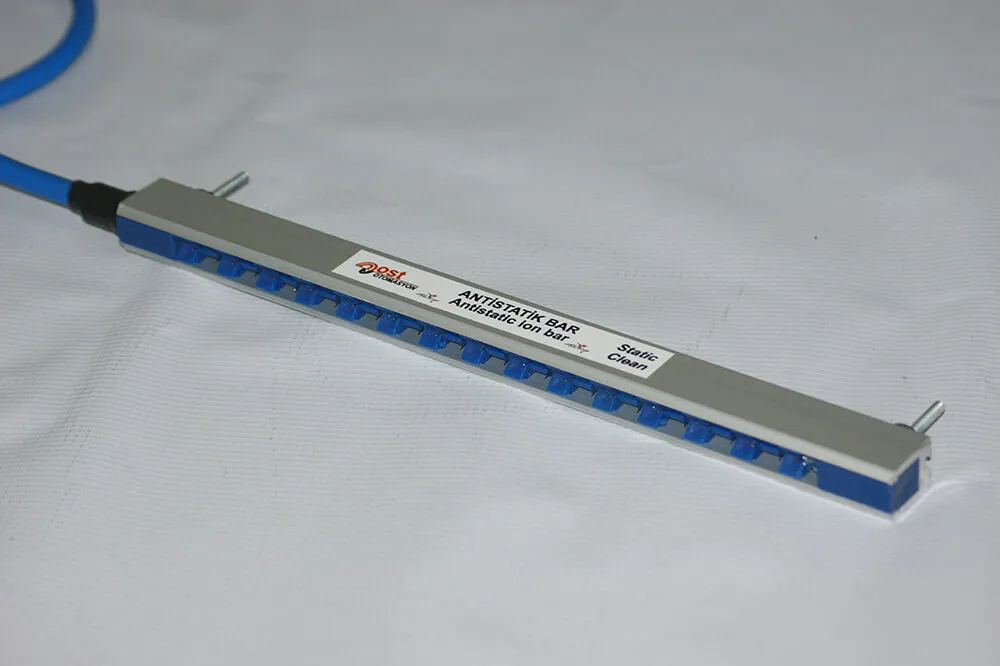
Unwinding, before printing and at the delivery: The antistatic bar provides continuous neutralization at a maximum distance of 4 cm from the material; with air-assisted models, this distance increases to up to 50 cm. Thanks to its very slim profile, it can also be mounted in tight gaps between machine parts, and it is manufactured in one piece from 10 cm up to 4 m.
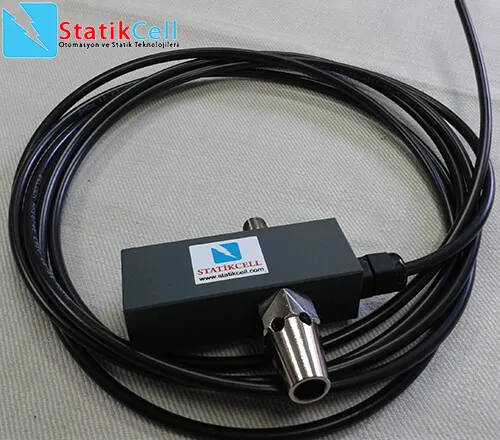
Narrow sections of the press: At points along the paper or film path where a bar cannot fit, the antistatic nozzle directs ionized air straight to the target area. Nozzles are used above all on printing presses, as well as in offset and pad printing; they have an effective distance of 500 mm and work with 5–6 bar of dry, clean compressed air.
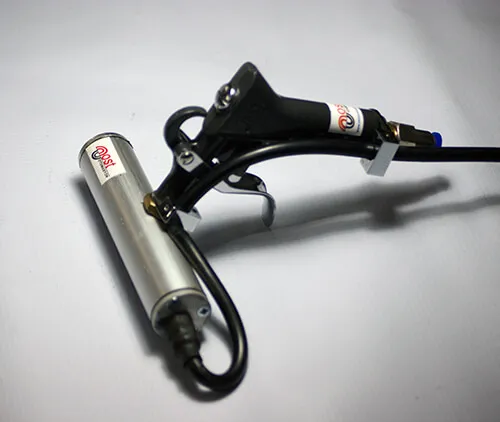
Screen printing and manual cleaning: The antistatic air gun is used to eliminate static and remove dust from small parts before screen printing. The air gun also has an effective distance of 500 mm and requires 5–6 bar of compressed air.
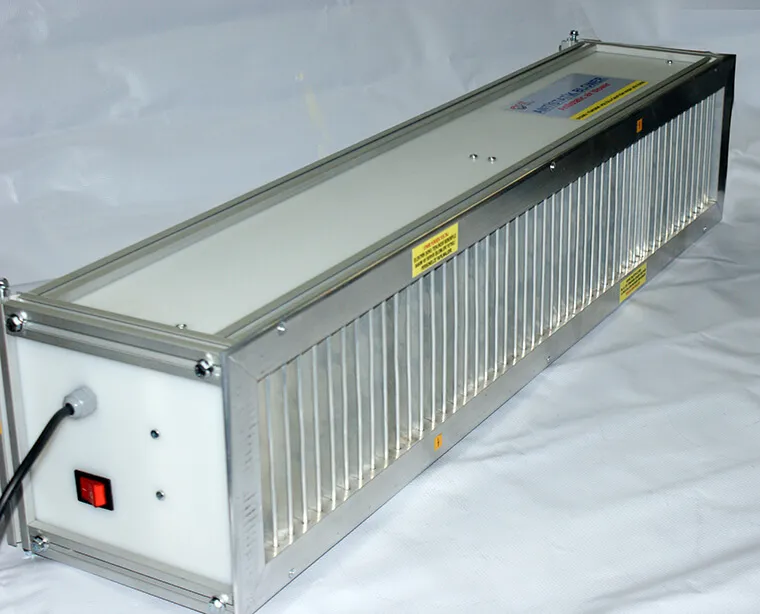
Flexo and sheet printing: At points where it is difficult to get close to the material, the ionizing blower blows ionized air from a distance of 1–2 m and does not need compressed air.
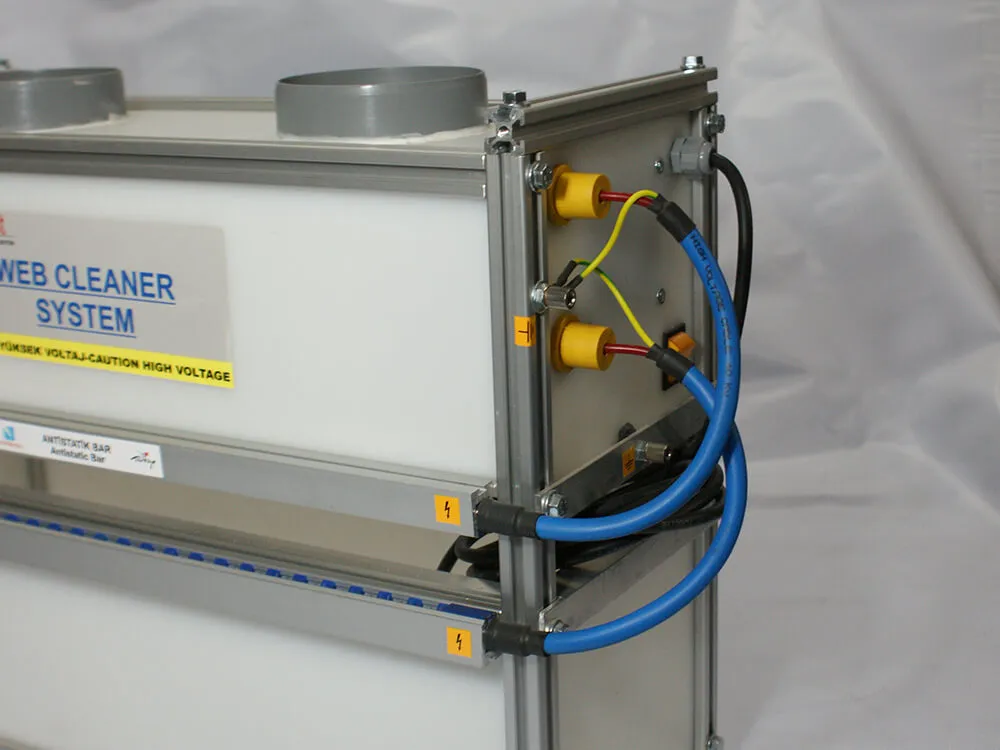
Dust removal before printing: The web cleaner uses ionizing bars, compressed air and an extraction system to clean dust off the surface to be printed, on the line. A single-sided model is chosen for one side of the material and a double-sided model for both sides.
Bars, nozzles and the air gun take the high voltage they need from the AC antistatic power supply. In-mold labeling (IML) is a separate application: there, static charging is used to make the label adhere to the mold, and it is covered on its own page.
| Problem | Solution | Product |
|---|---|---|
| Specks and marks that do not take ink | Neutralization and dust extraction before printing | Web cleaner |
| Sheets stick together, feeding is disrupted | Neutralization at the feed and delivery | Antistatic bar |
| Narrow point with no room to mount a bar | Ionized air driven by compressed air (500 mm) | Antistatic nozzle |
| Dust on small parts before screen printing | Manual application of ionized air | Antistatic air gun |
| Far from the material, large area | Fan-driven ionized air (1–2 m) | Ionizing blower |
For the right solution
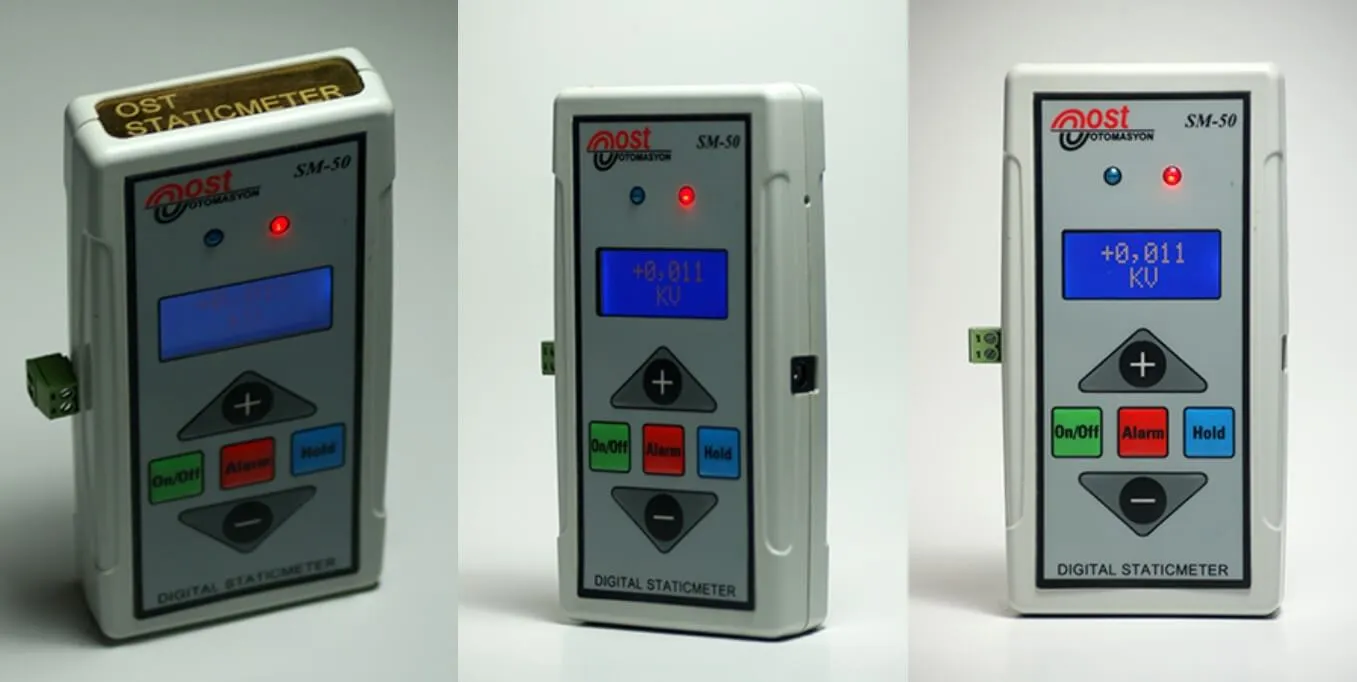
To determine the right product and length, the following information is enough: the material being printed (paper, board, film, label material), the printing technique, the material or reel width, the machine speed, the mounting distance between the equipment and the material, and whether compressed air is available on the machine. For dust removal, please also specify whether one or both sides need to be cleaned. A measurement taken with a static meter at the point where the problem occurs speeds up diagnosis by showing the level and polarity of the charge.
Send us the information via the contact form, and we will determine the best solution for your printing line together.