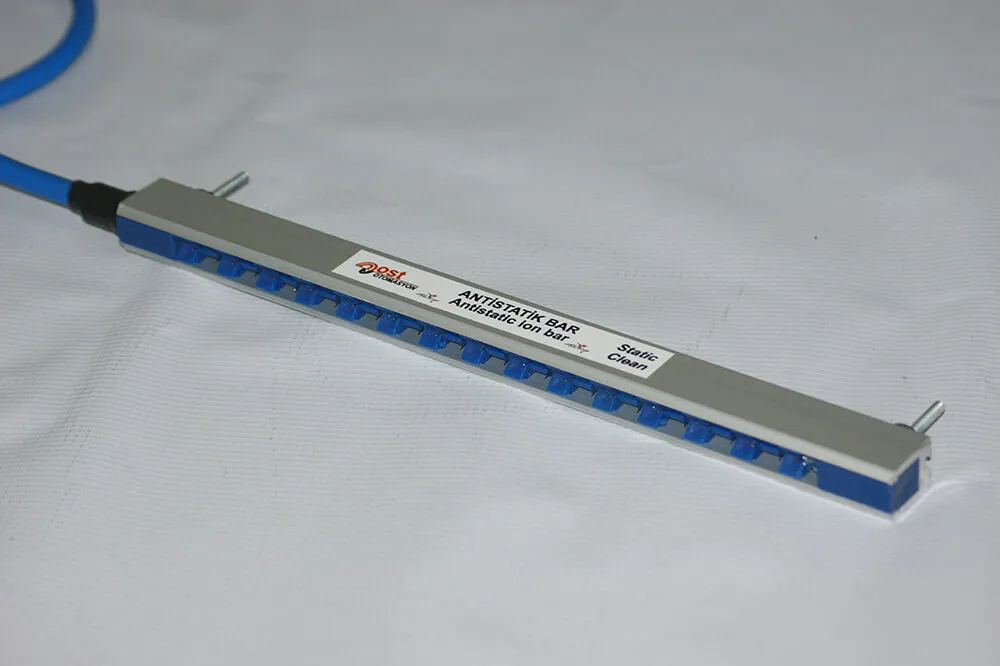
Static eliminators are static electricity removal and prevention devices that neutralize the static charge built up on a material surface by ionization. Positive and negative ions formed at emitter pins supplied with high voltage are attracted to the charged surface and balance its charge. This eliminates problems such as materials sticking together, attracting dust and giving operators electric shocks.

Which product, and when?

Product Distance to material When to choose it
Antistatic bar (ionizing bar) Max. 4 cm Continuous neutralization on the line; one-piece lengths from 10 cm to 4 m
Air-assisted antistatic bar Up to 50 cm When the bar cannot be placed close to the material
Antistatic nozzle 500 mm Tight spots a bar cannot reach; requires compressed air
Antistatic air gun 500 mm Manual cleaning and neutralization of parts; requires compressed air
Ionizing blower 1–2 m Large areas; no compressed air required
Carbon fiber brush 1 cm (non-contact) Static elimination without an electrical connection

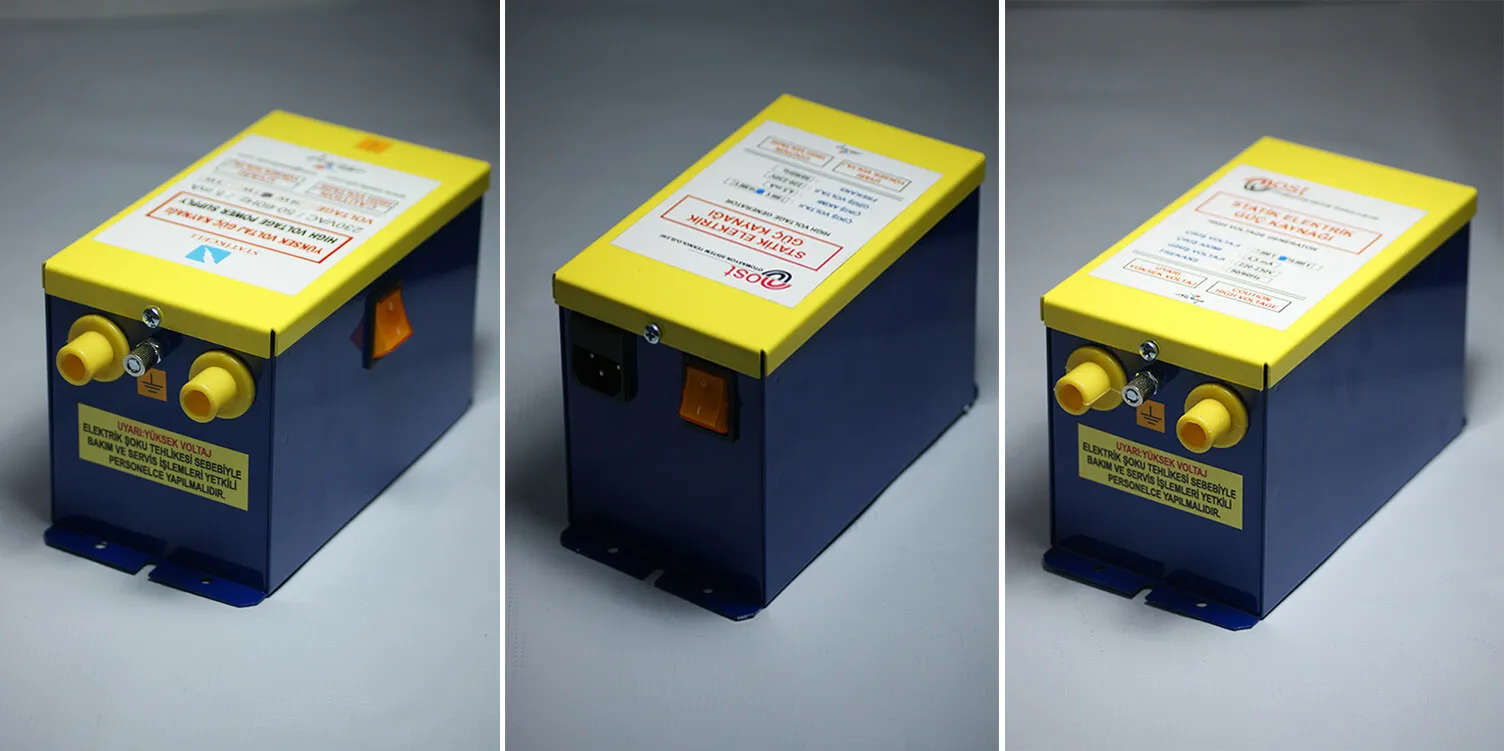
Bars, air guns and nozzles draw the high voltage they need from the AC antistatic power supply.

Frequently asked questions

What should I look for when choosing a static eliminator? First consider the distance between the equipment and the material, then the material width, the line speed and whether compressed air is available on the line. The table above is a guide for an initial selection; for the exact model, tell us about your application.

Is an ionizer the same as an antistatic bar? An antistatic bar is an industrial ionizer: it removes static charge by ionizing the air with its emitter pins. Air guns, nozzles and blowers are also types of ionizer that work on the same principle.

+−++−0000+−+−≤ 4 cm01 ANTISTATIC BAR02 CHARGED SURFACE03 NEUTRAL SURFACEDIRECTION OF TRAVEL →
FIGURE 1 · ANTISTATIC BAR IN OPERATION

Our static eliminators

Static Eliminators01

Antistatic Bars

The most widely used static eliminator, producing positive and negative ions at its emitter pins with AC high voltage. Inductive, capacitive and air-assisted models; one-piece from 10 cm to 4 m.

Effective working distance
max. 4 cm (max. 50 cm for air-assisted models)
Static Eliminators02

AC Antistatic Power Supply

Compact AC high-voltage power supply designed for ion generation, powering capacitive and inductive antistatic bars, nozzles and the antistatic air gun.

Power input
220 V AC, 50–60 Hz

Static Eliminators03

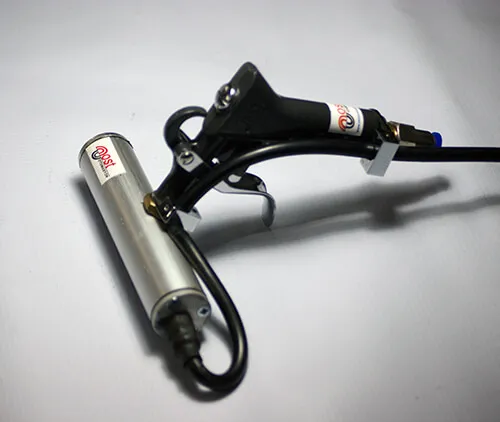
Antistatic Air Gun

Ionizing air gun assisted by compressed air, designed for manually eliminating static electricity, preferably on small products. It removes static charge and cleans dust particles off the surface.

Effective distance
500 mm

Static Eliminators04

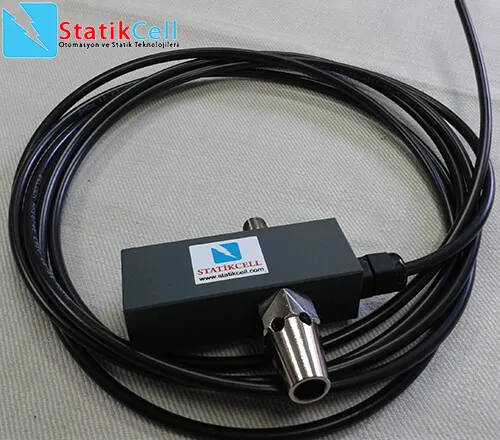
Antistatic Nozzles

Ionizing nozzle assisted by compressed air, used to eliminate static electricity in narrow spaces that antistatic bars cannot reach. It removes static charge and cleans dust off the surface.

Effective distance
500 mm

Static Eliminators05

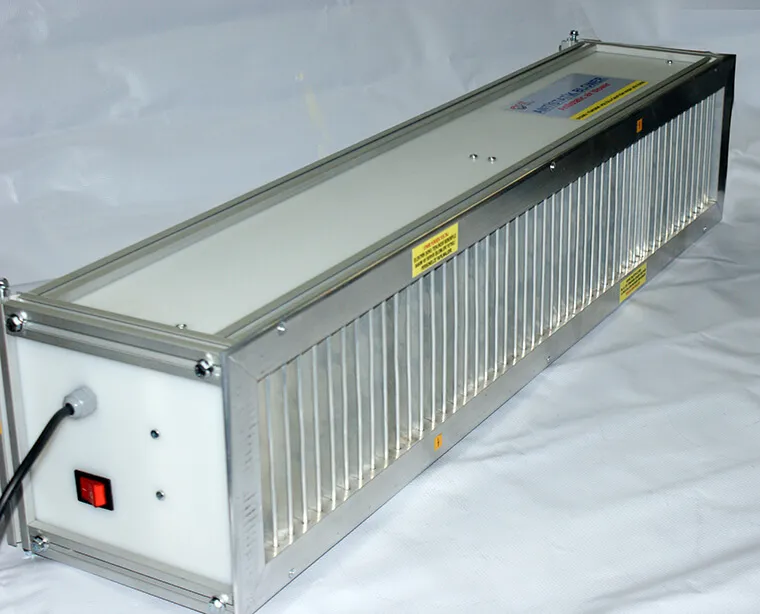
Ionizing Blower (Antistatic Blower)

Fan-assisted static eliminator built for ionization over long distances (1–2 m). The fan speed can be set with a dimmer to increase or decrease the effective distance.

Effective ionization distance
1–2 m

Static Eliminators06

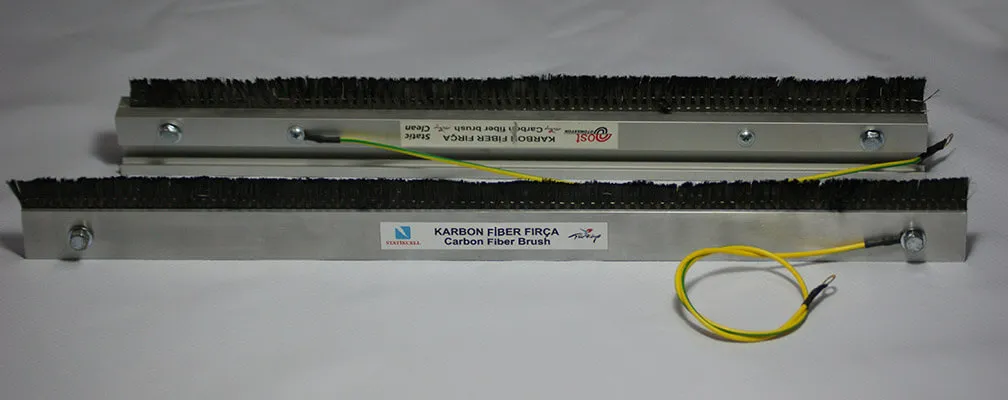
Antistatic Carbon Fiber Brush

Exproof brush (ATEX certification in progress) designed for areas at risk of fire and explosion that needs no electricity: its grounded carbon fiber bristles neutralize static electricity on flat materials.

Working distance
1 cm (non-contact)

Tell us about the static problem on your line

Share the material type, line width and speed, and we will work out the right solution together. We respond to quote requests within 2–3 business days.