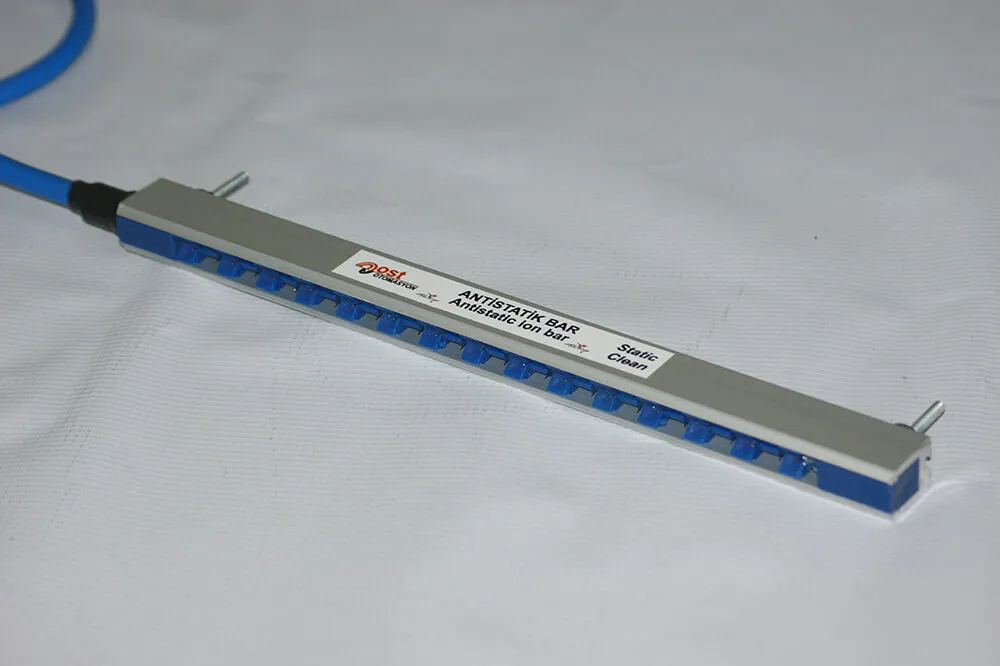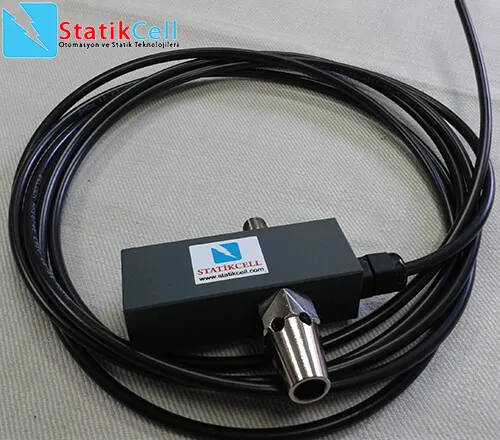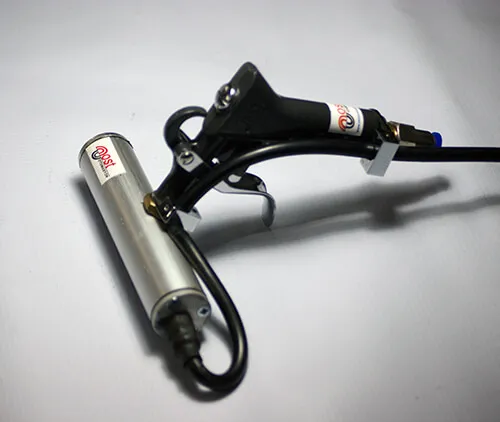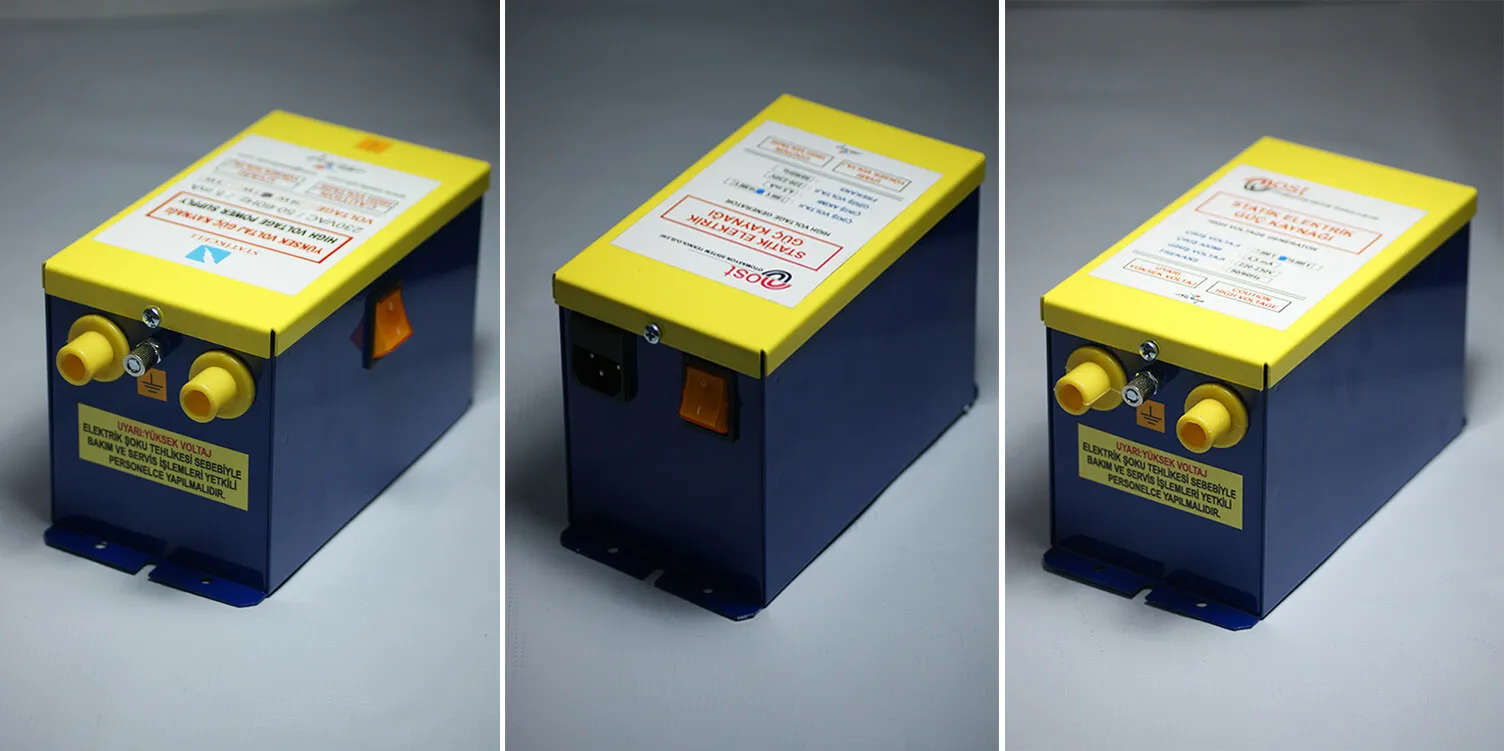
The AC antistatic power supply is an AC high-voltage power supply designed for ion generation that powers capacitive and inductive antistatic bars, antistatic nozzles and the antistatic air gun. Running on 220 V AC (50–60 Hz) mains voltage, the unit delivers the AC high voltage of 5, 7 or 10 kV at 5 mA that static elimination equipment needs. Its short-circuit protected design, the choice of 2 or 4 socket outputs and the fact that it can be used in either a horizontal or a vertical position make it easy to adapt to different machine layouts. Its compact housing takes up little space on the machine, which is a real advantage in applications where space is tight.
How does an AC antistatic power supply work?
Static elimination is based on ionization. The power supply converts the mains voltage into high voltage and delivers it to the ion emitter pins in the antistatic bar, nozzle or air gun. The strong electric field concentrated at the sharp pin tips ionizes the surrounding air; this phenomenon is known as corona discharge. Because the voltage is alternating (AC), the polarity of the pins changes constantly, and the same pins alternately produce both positive and negative ions.
A statically charged material surface attracts ions of the opposite polarity to its own charge. These ions balance the excess charge on the surface and neutralize the static electricity. This is why the power supply can be considered the heart of the ionizer system: the efficient operation of bars and nozzles depends on a stable high-voltage supply at the right level. The socket outputs make it quicker to connect equipment, and the short-circuit protection is designed as a safeguard against a short circuit at the output.
Where is the AC antistatic power supply used?
It is used in many areas where static electricity disrupts production, above all in the printing, textile and plastics industries. On plastic bag production, film drawing, blown film and extrusion lines, high static charges build up as the material separates from rollers and reels. This charge can make the film stick, attract dust and expose operators to electric shocks. In coating, lamination, sheet extrusion, slitting, winding and stretch film applications, charged layers can stick to each other or to machine parts and impair winding and cutting quality.
In flexo, inkjet, laser and pad printing applications, static electricity draws dust onto the surface before printing and impairs print quality. Warping in textiles, paper production, folding machines, injection molding, and the production of melamine-faced MDF and particleboard are also among the main applications of the unit. In all of these applications, the power supply powers the antistatic bars and nozzles installed on the line, keeping ionization going without interruption.
Choosing the right power supply
To determine the right power supply, you first need to be clear about the equipment it will power. The number of bars, nozzles or air guns to be connected, and the type (capacitive or inductive) and length of the bars, are the main factors that determine the number of output sockets and the voltage level. Whether the unit will be mounted horizontally or vertically, the space available on the machine and the type of material processed on the line are also useful for making the right choice.
Contact Statikcell to determine the AC antistatic power supply and equipment combination that suits your application.