The antistatic bar is the most common way to eliminate static electricity on production lines. But the same bar is not right for every line. The right choice depends on the model type, the distance between the bar and the material, the bar length and the mounting conditions. In this article, we summarize the main points to look at when making your choice.
1. Model type: inductive and capacitive
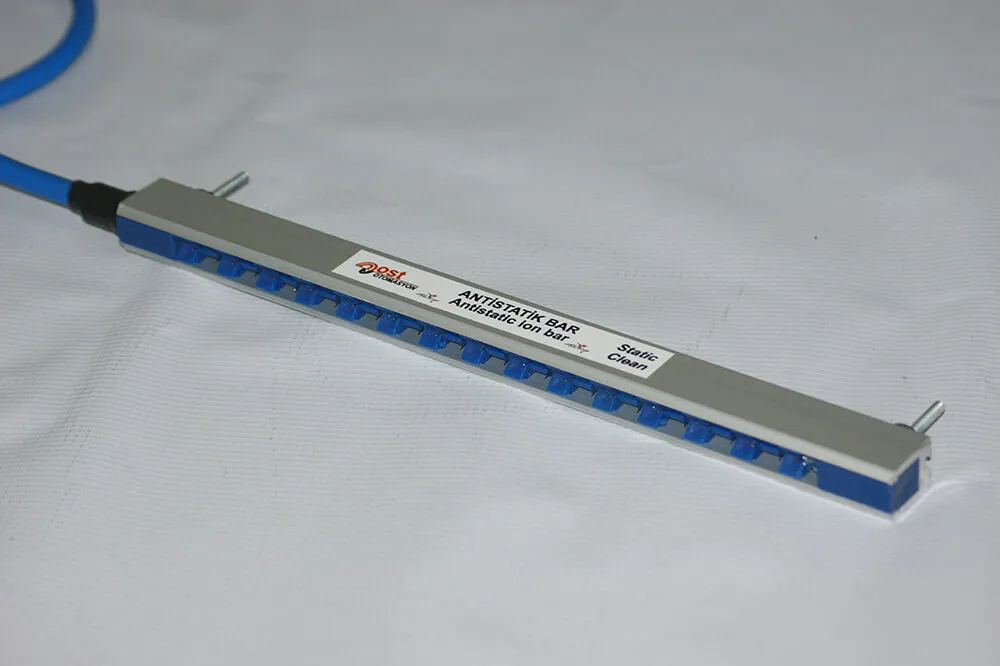
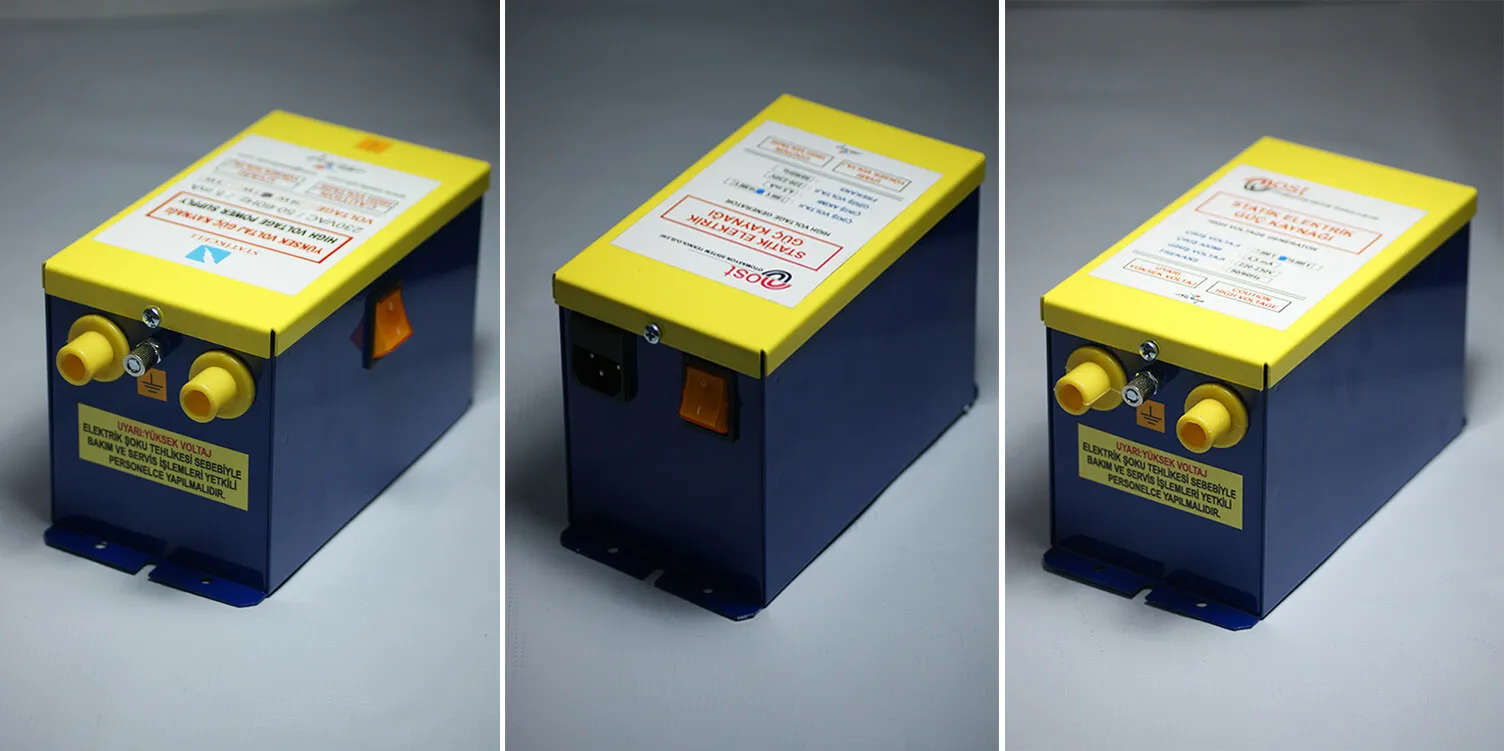
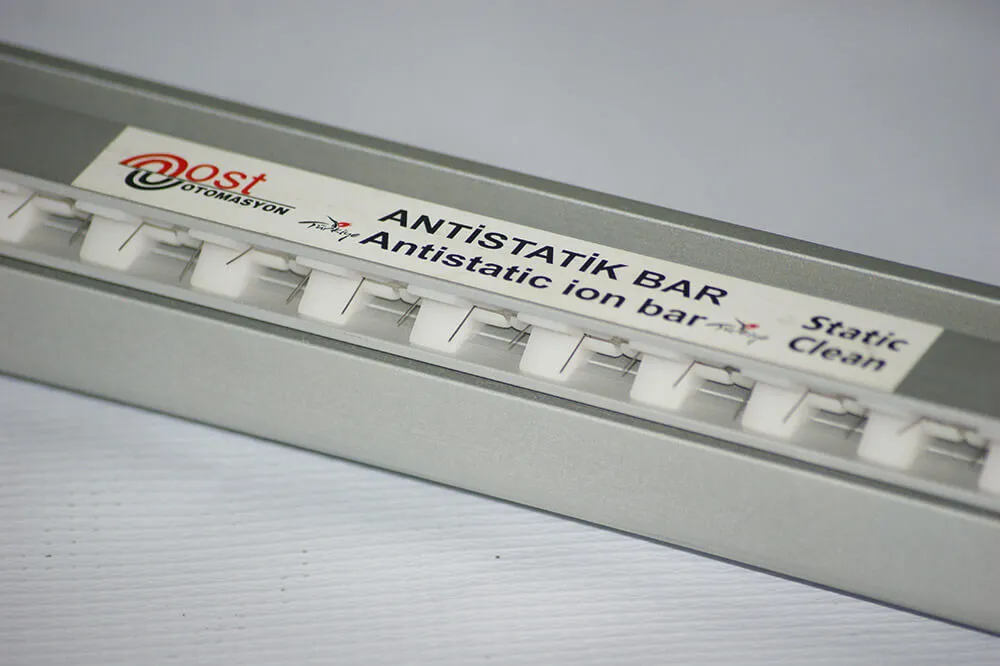
Statikcell antistatic bars are made in two models: inductive and capacitive. Both are powered by an AC high-voltage power supply and neutralize the static charge on the surface by generating positive and negative ions at their emitter pin tips.
The most noticeable difference between the two models is how they behave in a short circuit: an inductive bar sparks from its emitter pins when short-circuited, whereas a capacitive bar does not. In applications where sparking is undesirable, the capacitive model has the advantage.
2. Working distance
Ions in the air quickly recombine and lose their effect. The closer the bar is to the material, therefore, the more effective the neutralization.
- The effective working distance of standard antistatic bars is a maximum of 4 cm.
- In applications with a greater distance, air-assisted models are preferred. Compressed air carries the ions to the material, and the working distance can be extended to up to 50 cm.
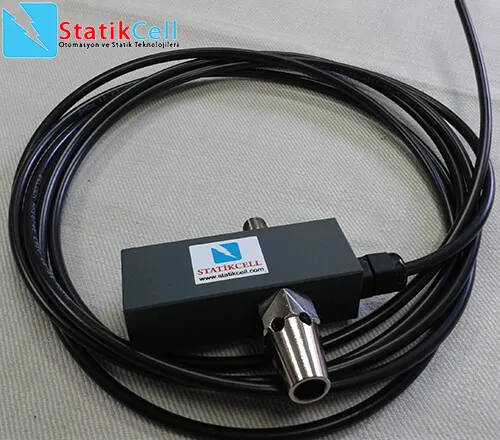
- In tight spots where a bar will not fit at all, compressed-air nozzles can be used.
3. Bar length
The bar length is chosen according to the width of the material or reel being processed; the effective zone of the bar must cover the full width of the material. Statikcell antistatic bars can be manufactured in one piece from 10 cm up to 4 m, so there is no need to join extra sections, even on wide lines.
4. Mounting conditions
Mounting space on the machine is often limited. When making your choice, pay attention to the following:
- Profile size: Bars with a slim profile fit more easily into tight gaps between machine parts.
- Mounting adjustment: The screw channel on the back (YSB screw) allows the bar to be adjusted and mounted at the desired point.
- Cable and grounding: A plug-in cable makes connection quicker. Bars with a built-in grounding cable need no extra cable runs.
- Cable rating: The high-voltage cable must be suitable for the operating voltage. The special cable used on Statikcell bars is rated for voltages of up to 60 kV.
5. Maintenance and service
The emitter pin tips of antistatic bars can become contaminated over time; regular cleaning maintains their efficiency. If a fault occurs, it is a major advantage if the bar can be repaired. Because every part of a Statikcell antistatic bar can be disassembled, the bars are repairable; for details, see our antistatic bar repair and service page.
What information should you provide when requesting a quote?
The following information helps us determine the most suitable bar for you:
- The type of material processed (film, paper, fabric, sheet…)
- Material or reel width
- Line speed
- Mounting distance between the bar and the material
- Whether compressed air is available on the line
- Details of your existing power supply
Tell us about your application, and we will determine the right model and length together.