
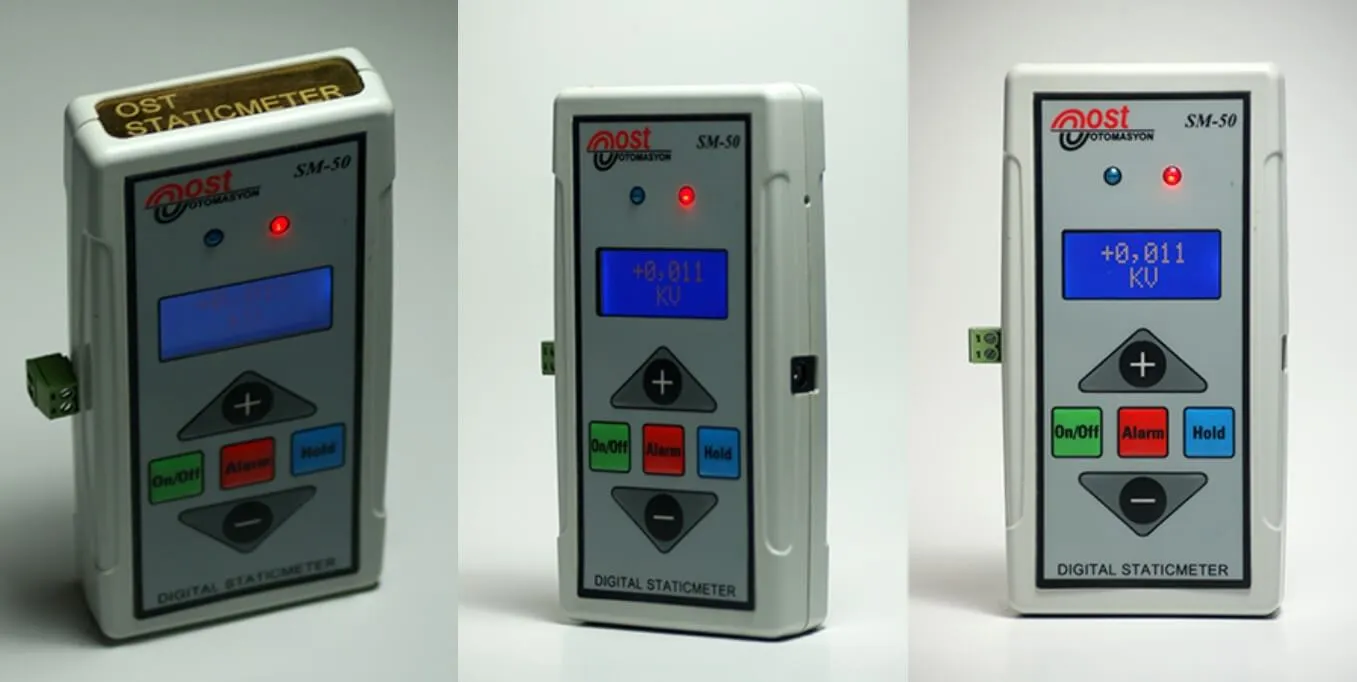
Static Meter
Digital measuring device that detects the static charge and its polarity (+/-) on insulating materials such as plastic, paper and fabric. 0–200 kV measuring range and alarm output.
- Measuring range
- 0–200 kV
Products: 1
Digital static meters that measure the level and polarity of electrostatic charge on material surfaces.
The first step in solving a static electricity problem is to measure it. A static meter shows the level and polarity (+/−) of the static charge on insulating materials such as plastic, paper and fabric. Measurement helps you determine what kind of antistatic solution is needed at which point, and verify the effect of the solution once it is in place.
Static charge builds up most where the material separates from a surface: as film leaves a roller, as a reel unwinds, as paper or fabric passes over cylinders and as sheets are stacked. Start at the point where the problem appears and take measurements at these critical points on the line.
Why is it important to know the polarity of the charge? Knowing the polarity helps you understand the source of the problem and choose the correct polarity, particularly in static charging applications.
Can a static eliminator be selected without a measuring device? An initial selection can be made from the distance, material and line data; however, measurement shows exactly where the problem is and how effective the solution is.
Digital measuring device that detects the static charge and its polarity (+/-) on insulating materials such as plastic, paper and fabric. 0–200 kV measuring range and alarm output.
Share the material type, line width and speed, and we will work out the right solution together. We respond to quote requests within 2–3 business days.