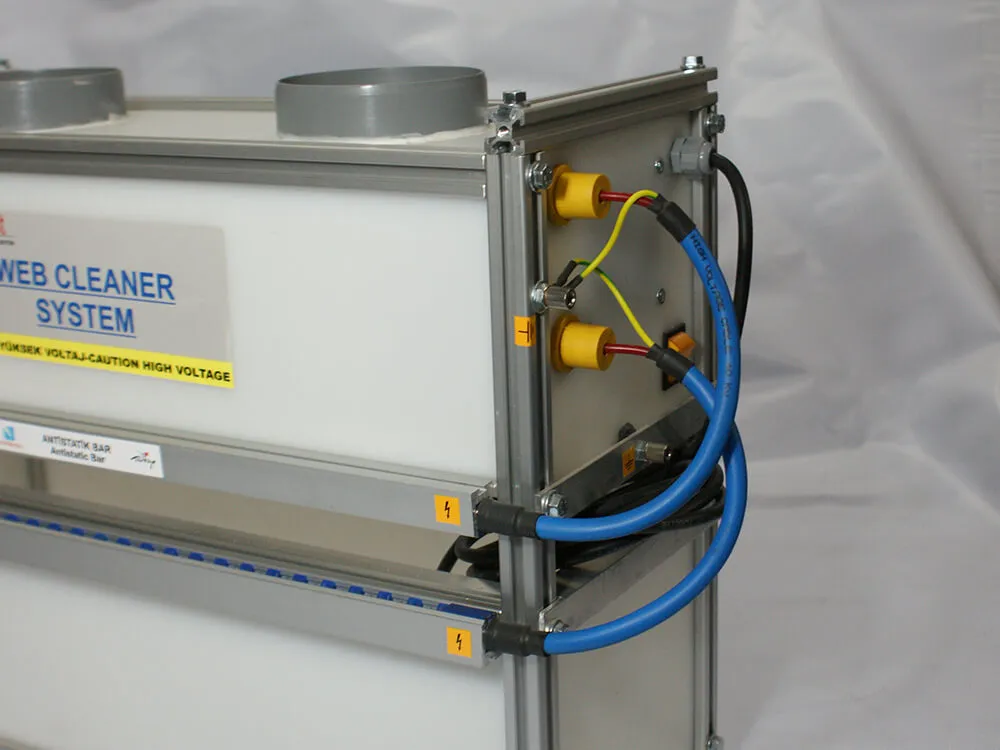
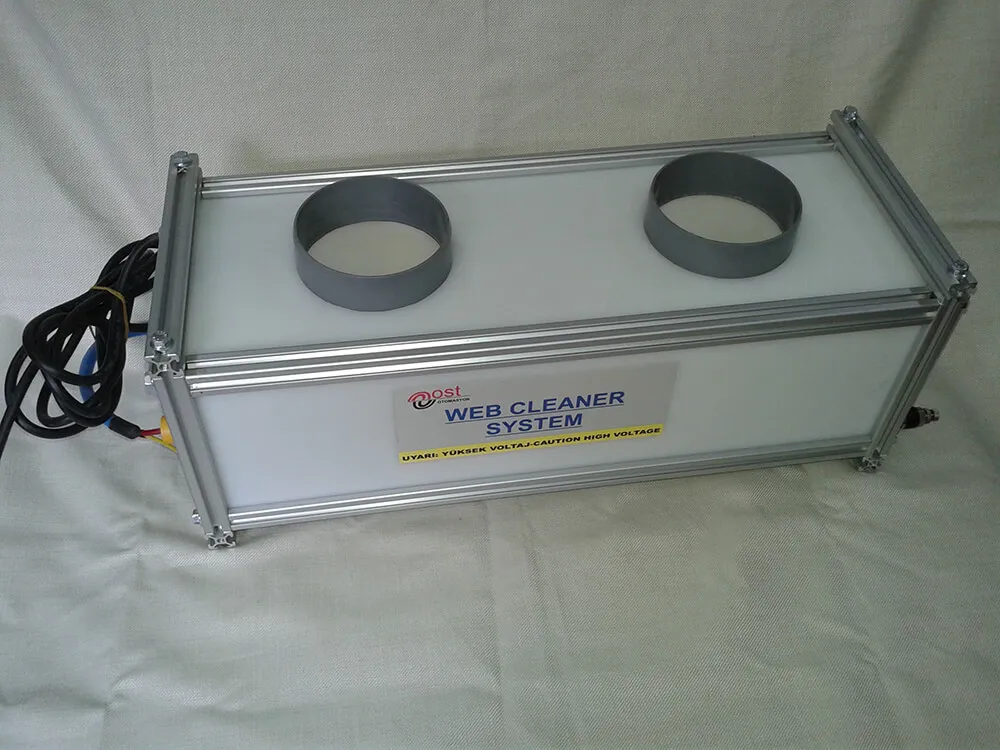
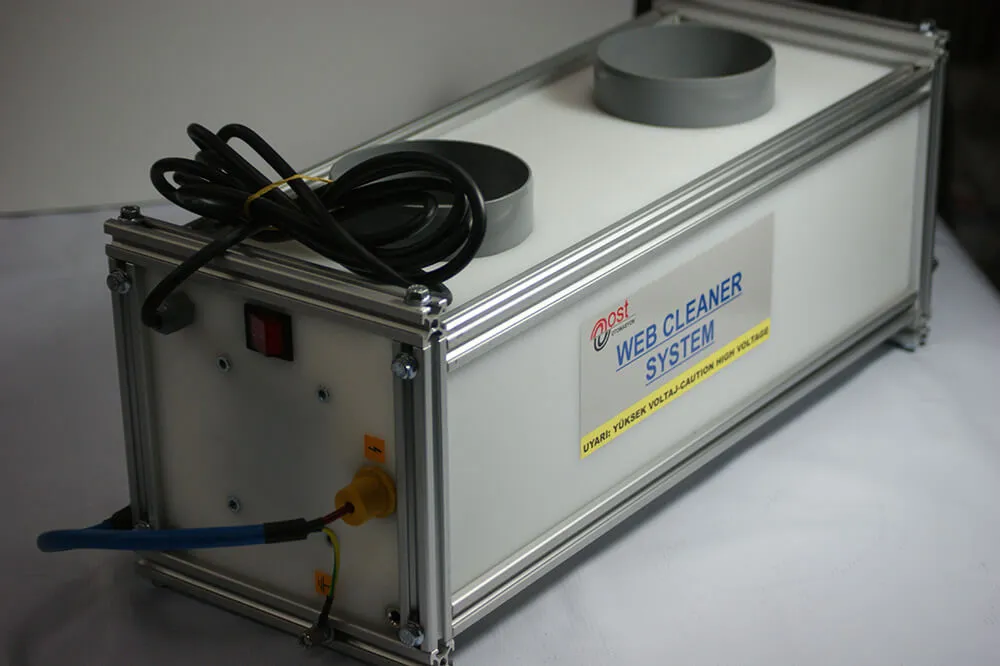
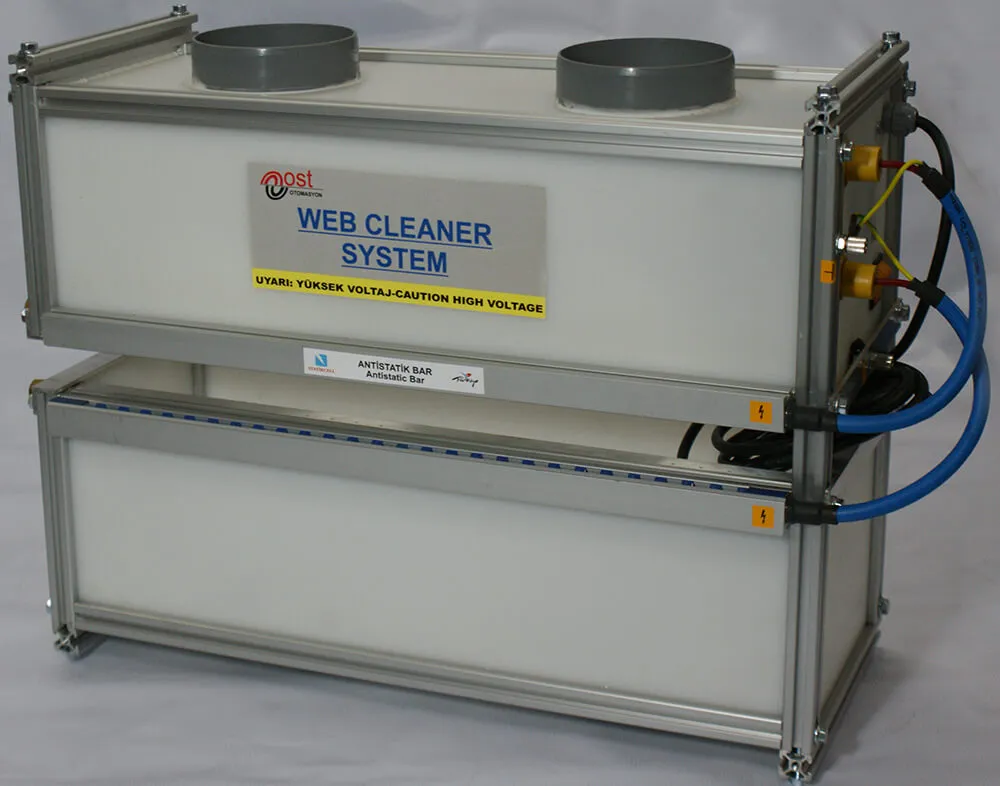
In printing plants and other businesses that carry out printing, dust is one of the most important factors affecting print quality and how well the machine runs. The dust extraction system known as a web cleaner is designed to eliminate this problem and improve production quality. Depending on the application, web cleaners come in two types, single-sided and double-sided, and can be made to the size required for the application. The system is supplied with connecting hoses and an extraction system, and its sigma profile design makes it easy to mount on the machine.
How does a web cleaner work?
Insulating materials such as plastic film and paper pick up static charge during production and winding. This charge draws dust particles from the surroundings onto the surface by electrostatic force and holds them firmly. That is why cleaning by brushing or blowing air alone is often not enough: as long as the charge remains, the dust does not separate completely from the surface or soon returns. The web cleaner solves this problem in three steps:
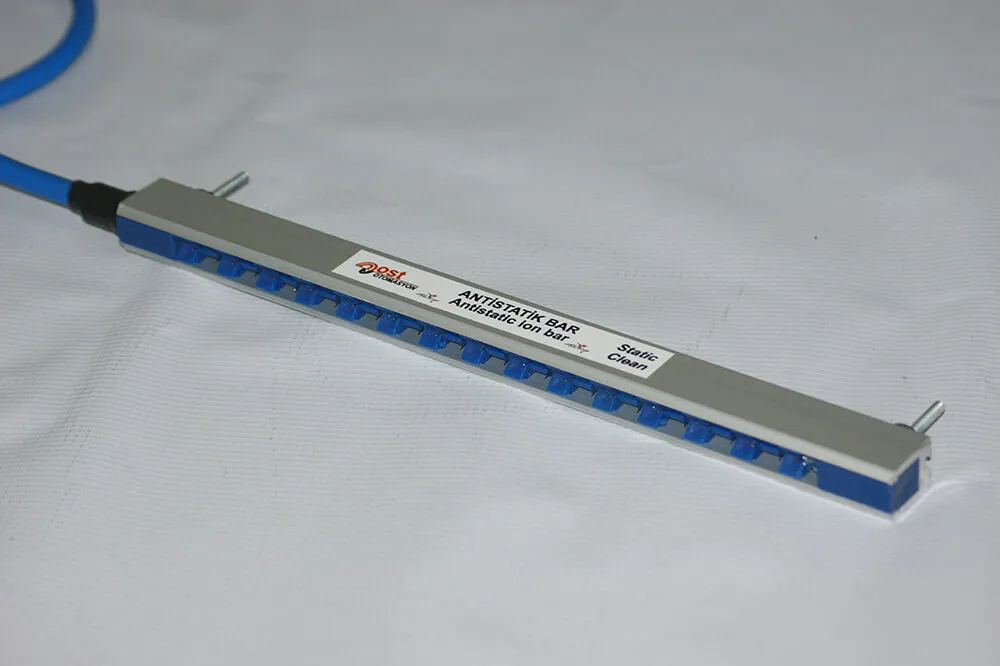
First, the built-in ionizing bars neutralize the surface charge with the positive and negative ions they generate, eliminating the static charge that binds the dust to the surface. Next, compressed air lifts the now-released dust particles off the surface. Finally, the extraction system vacuums up the airborne particles and removes them. The collected dust can be filtered or ducted outside the system (the plant) for disposal, as preferred. This reduces the risk of dust spreading back onto the cleaned surface or the surrounding machines.
Where are web cleaners used?
The web cleaner is used to remove dust from materials to be printed, above all in the printing and plastics industries. Even a single speck of dust left on the surface before printing can cause unprinted spots, smudges and defective products. Such defects increase waste, and lead to machine stoppages and additional cleaning work. Dust can also build up on printing plates and rollers and disrupt the smooth running of the machine.
In plastic film and sheet production, high static charge makes it easier for dust to cling to the surface. If these materials are not cleaned before printing, lamination or coating, the particles on the surface show up as visible defects in the end product. The web cleaner reduces this risk by cleaning the material while it moves along the line.
Choosing the right system
To determine the right web cleaner, you first need to be clear about whether one side or both sides of the material need to be cleaned. In addition, information such as the material type and width, the line speed, the mounting space on the machine, the availability of compressed air, and whether the extracted dust should be filtered or ducted outside the plant plays an important role in sizing the system.
Contact Statikcell to find the web cleaner solution that suits your pre-print dust problem.