Where does static electricity arise in in-mold labeling?
In in-mold labeling (IML), a pre-printed plastic label is placed inside the mold; when the mold closes and the plastic is injected, the label becomes an integral part of the surface of the part. The process generally consists of the following steps:
- Label stack: Cut labels wait in a stack. The labels become charged as they separate from each other and are picked from the stack.
- Picking and transferring the label: The feeding system picks the label from the stack and transfers it to the mold.
- Placing in the mold: The label is released onto the mold surface and must stay in place without slipping until the plastic is injected.
- Removal from the mold: The labeled part is removed from the mold, conveyed and stacked.
In this process, static electricity plays two different roles. Unwanted charge that arises in the label stack and during feeding makes the labels stick together. In the placement step, on the other hand, charge created deliberately is needed for the label to adhere to the mold surface.
Effects on production
- Feeding faults: Labels sticking together disrupt feeding; more than one label can be picked from the stack at the same time.
- Label slipping: If adhesion is insufficient, the label slips or falls out of place in the mold. The result is an incorrectly positioned label and a scrapped part.
- Stoppages: A label that falls or is placed incorrectly in the mold can mean the machine has to be stopped.
- Dust: Charged labels and plastic parts coming out of the mold attract dust from the surroundings; dust trapped between the label and the part can create a visible defect.
How does static charging (pinning) work?
The DC charging bar is powered by a DC high-voltage power supply and ionizes the air. Because the voltage is unidirectional, only ions of one polarity move toward the label and accumulate on its surface. The charged label is attracted to the mold surface by electrostatic force and stays in place without slipping until the plastic is injected. No adhesive or mechanical holder is used in this method; adhesion is provided entirely by electrostatic attraction.
The adhesion is temporary and its duration is not fixed. Seasonal temperature changes, the ambient humidity and the conductive resistance of the label material all affect how long it lasts. As a result, the same line may need different settings in summer and winter.
Solution: which product, where?
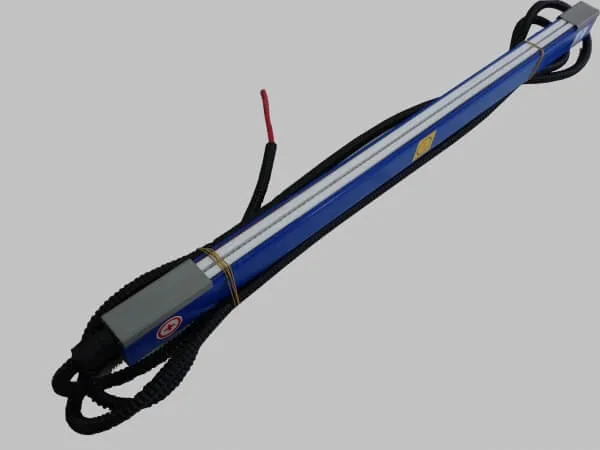
Holding the label in the mold: IML is one of the main applications of the DC static charging bar. The bar can be manufactured from 10 cm up to 400 cm. Because of the high operating voltages, it is designed, unlike static eliminating bars, with a fully insulated body and components; this design provides protection against the risk of arcing and insulation breakdown. The standard cable length is 2.5 m and can be extended on request.
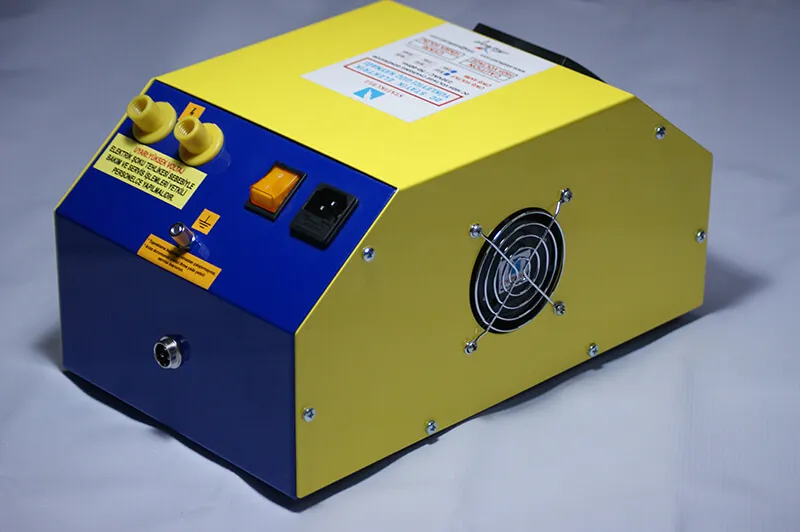
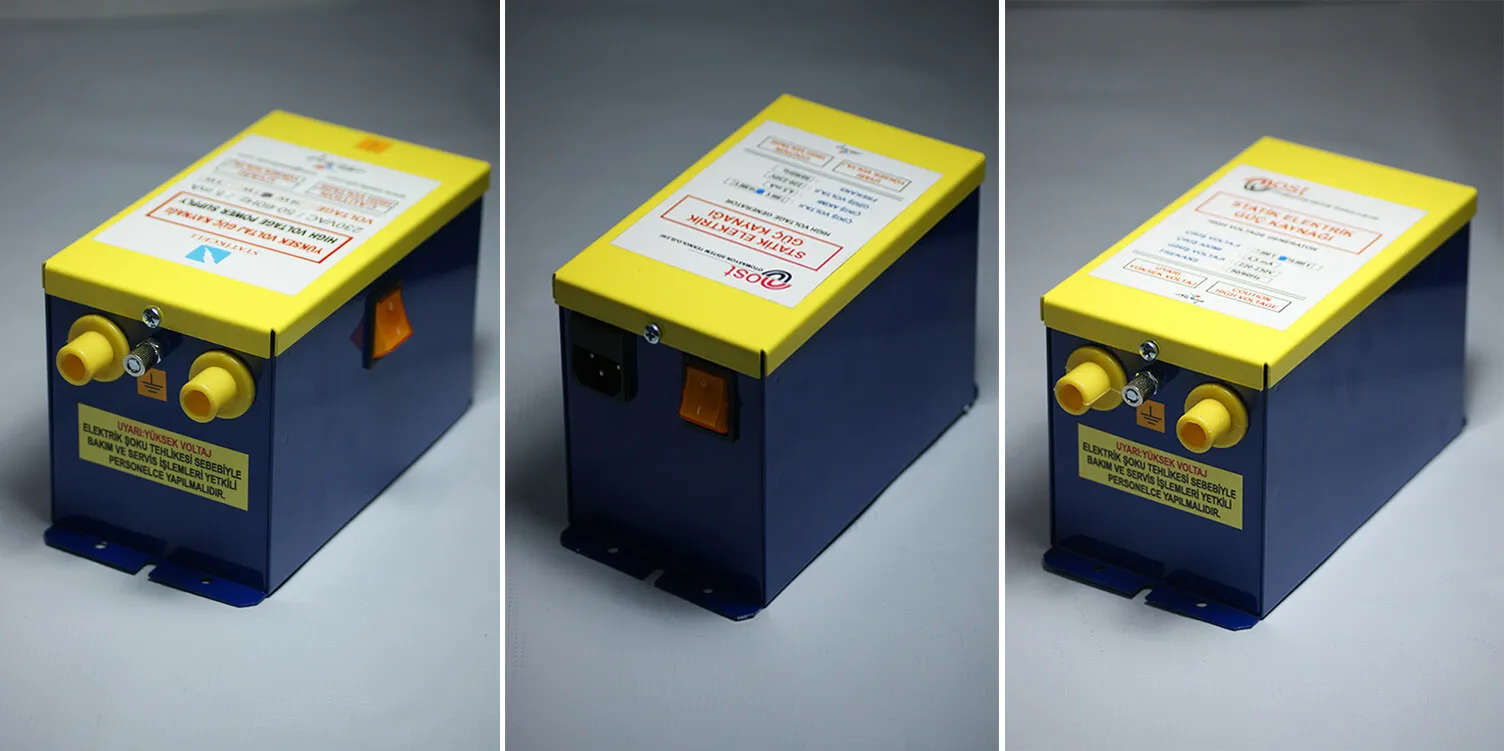
Providing the charging voltage: The DC static charging power supply generates a high voltage of DC 20–100 kV (depending on the model); the polarity is selected as negative or positive according to the application. The output voltage is set on the digital display. Because the output can be switched on and off by the connected system or from an external point, charging can run in step with the injection cycle. The response time before overcurrent protection trips can also be adjusted.
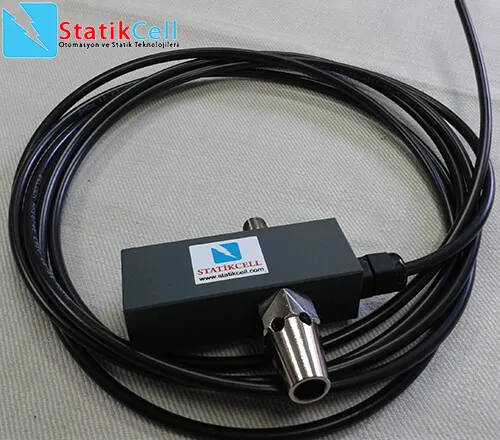
Eliminating label sticking: In-mold labeling is among the applications of antistatic nozzles. At narrow points with no room to mount a bar, the nozzle directs ionized air straight to the target area; it has an effective distance of 500 mm and works with 5–6 bar of dry, clean compressed air. It takes the high voltage it needs from the AC antistatic power supply.
Parts coming out of the mold: To stop injection-molded parts from attracting dust, the ionizing blower blows ionized air from a distance of 1–2 m.
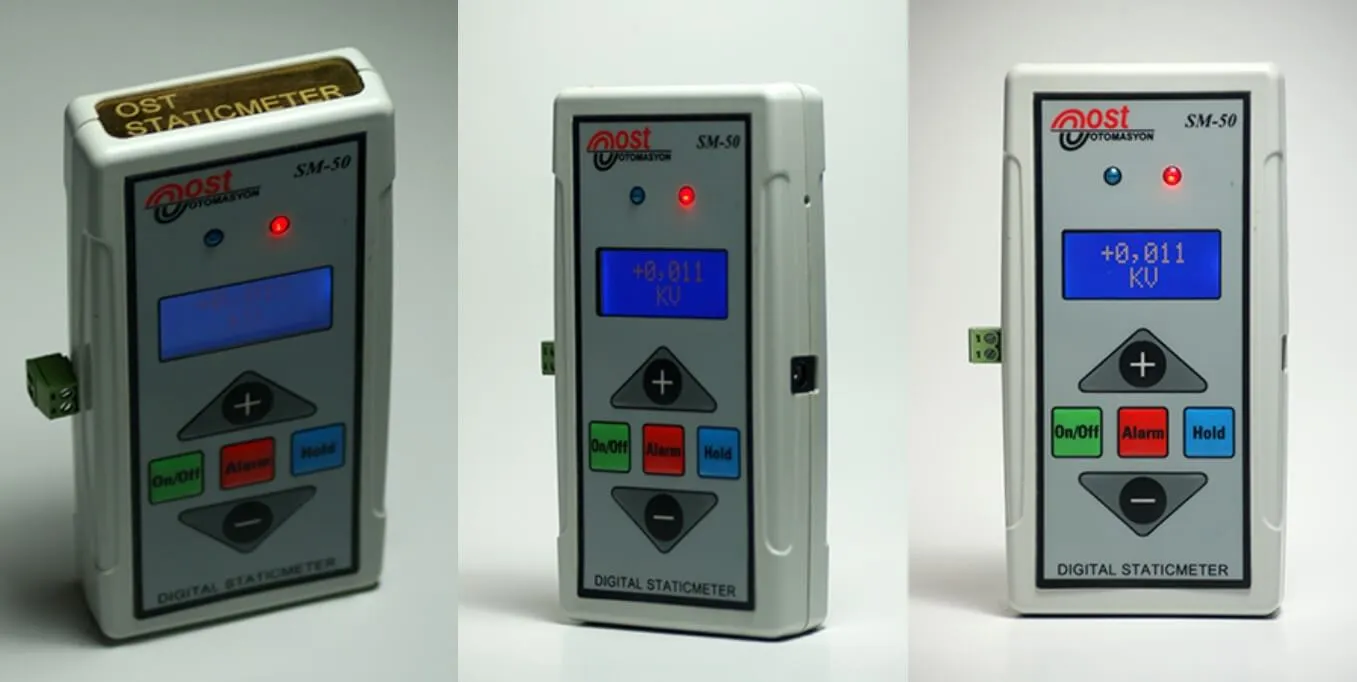
Measuring: The static meter shows the level and polarity (+/−) of the charge; it is used to see which polarity the label has been charged with and to verify the settings.
| Problem | Solution | Product |
|---|---|---|
| Label slips or falls in the mold | Static charging (pinning) | DC charging bar and DC power supply |
| Labels stick together in the stack | Ionized air in a tight space | Antistatic nozzle and AC power supply |
| Adhesion varies with the season | Voltage adjustment and measurement | DC power supply and static meter |
| Parts coming out of the mold attract dust | Fan-driven ionized air (1–2 m) | Ionizing blower |
For the right solution
To determine the right system, please share the following information: the label material and dimensions, the required bar length, the machine speed or cycle time, the mounting distance between the bar and the label, the cable length you need, any need for integration with the machine control system, the ambient temperature and humidity and, if nozzles are to be used, whether compressed air is available on the line.
Send us the information via the contact form, and we will determine the right voltage, polarity and bar design for your IML application together.