Where does static electricity arise on textile and nonwoven lines?
Fibers, yarns, fabrics and nonwoven materials, especially synthetic ones, readily build up static charge because they are insulators. On textile lines, the material travels at high speed and constantly rubs against guides, cylinders, rollers and its own layers. Charge arises at these points of friction and separation:
- Fiber processing and web forming: On nonwoven lines, fine fibers become charged as they pass over cylinders and are laid down in layers.
- Warping and winding: Yarns pick up charge through friction as they pass through guides and are wound onto beams or bobbins.
- Winding and unwinding: As fabric and nonwoven rolls are wound and unwound, the layers separate from each other.
- Cutting, slitting and folding: The material becomes charged again as it passes over blades and guides.
Dry ambient air, for example in production halls heated during the winter months, causes charge to build up more easily and to remain for longer.
Effects on production
- Fiber fluffing: Fibers charged with the same polarity repel each other; the fibers fluff up and the web is not laid down evenly.
- Wrapping around the machine: Charged fibers and yarns wrap around cylinders, rollers and machine parts; this can lead to breaks and machine stoppages.
- Attracting dust and lint: Charged fabric draws airborne dust and fiber fragments onto its surface.
- Winding and cutting problems: Layers stick together, edges do not wind evenly and cutting accuracy decreases.
- Operator shocks: Operators who touch charged fabric or rolls can receive unpleasant electric shocks.
Solution: which product, where?
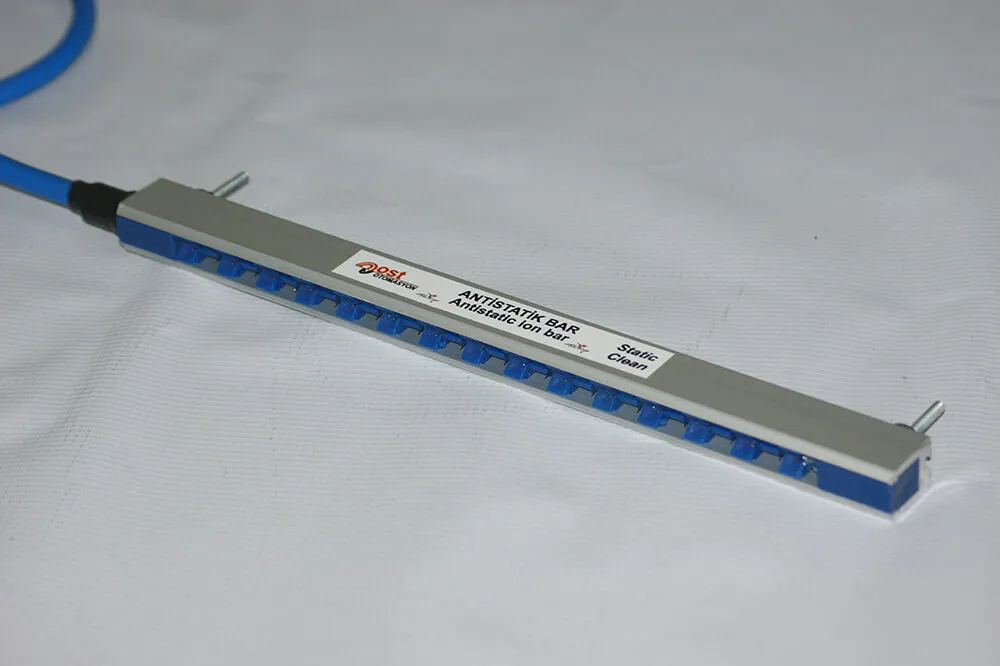
Warping, winding and roller exits: Textiles and nonwovens are among the main applications of antistatic bars. Standard bars work at a maximum distance of 4 cm from the material; if the bar cannot be brought close to the material, air-assisted models extend this distance to up to 50 cm. Because the bars are manufactured in one piece from 10 cm up to 4 m, they can be fitted as a single piece on wide fabric and nonwoven lines. Because every part can be disassembled, they can be repaired in the event of a fault.
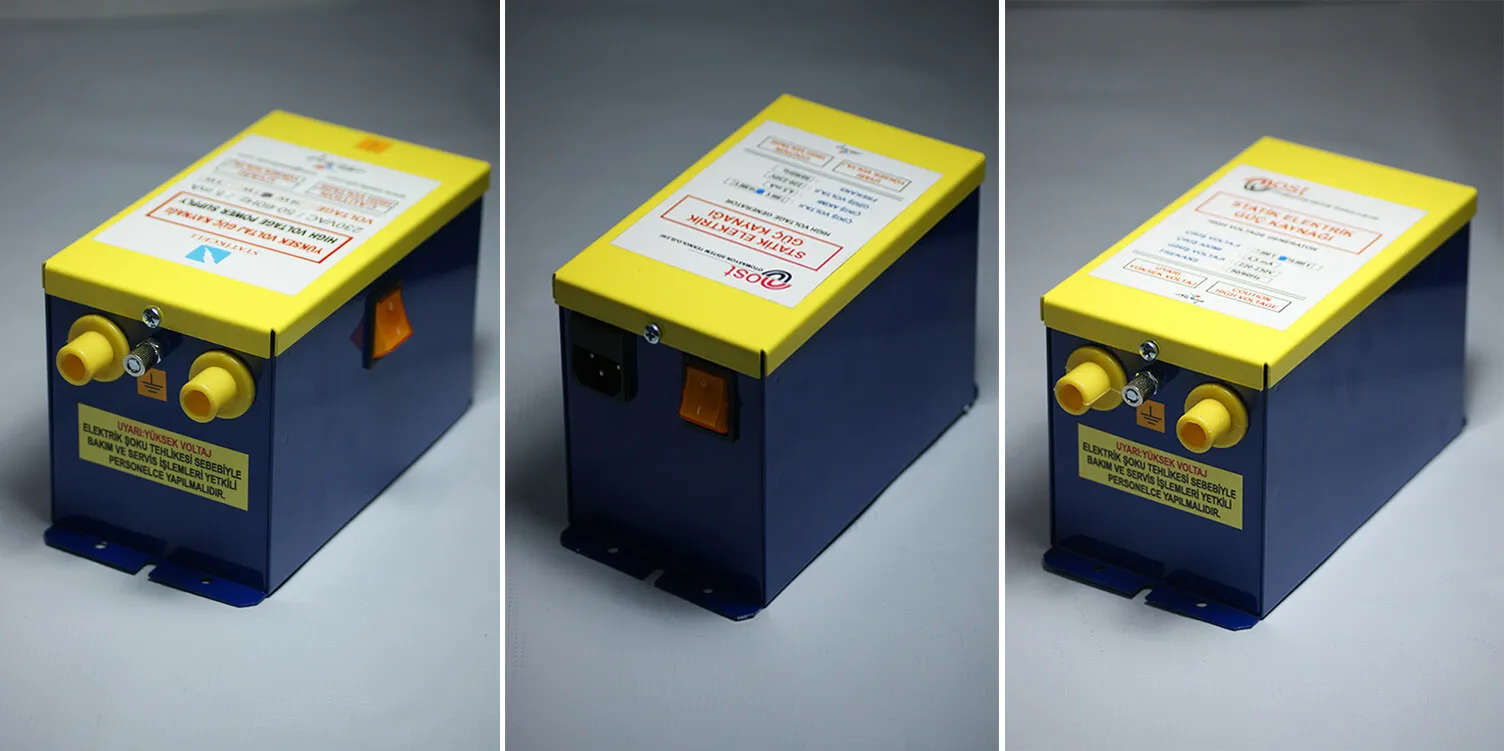
Power supply: The bars take the high voltage they need from the AC antistatic power supply. Warping in textiles is among the applications of this power supply. Its compact, short-circuit protected housing takes up little space on the machine.
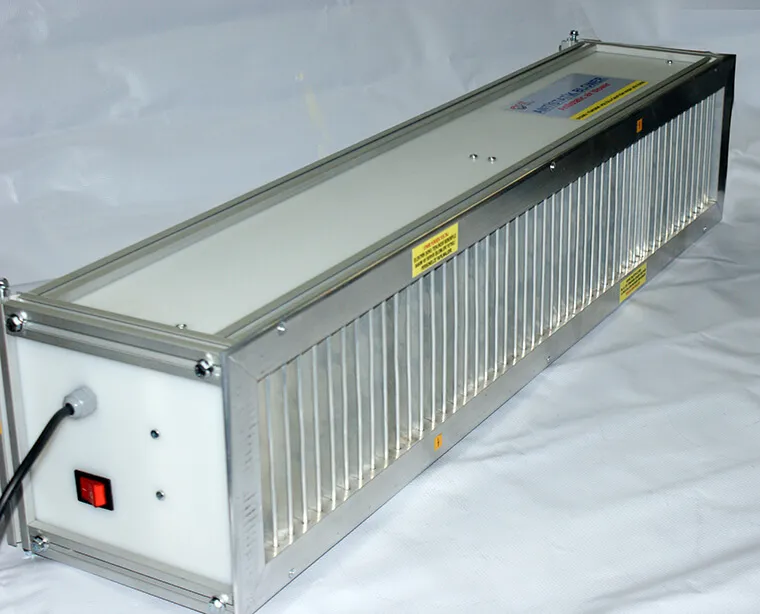
Long distances and large areas: When it is difficult to get close to the material in applications such as winding and warping, the ionizing blower blows ionized air from a distance of 1–2 m with fan assistance and does not need compressed air. Because the fan speed is set with a dimmer, a level can be chosen at which light fibers are not blown about.
Maintenance: In environments with a lot of fiber and dust, regular cleaning of the ion emitter pins and of the filter at the blower’s air inlet maintains ion output and the effective distance. For your installed equipment, see our service and support page.
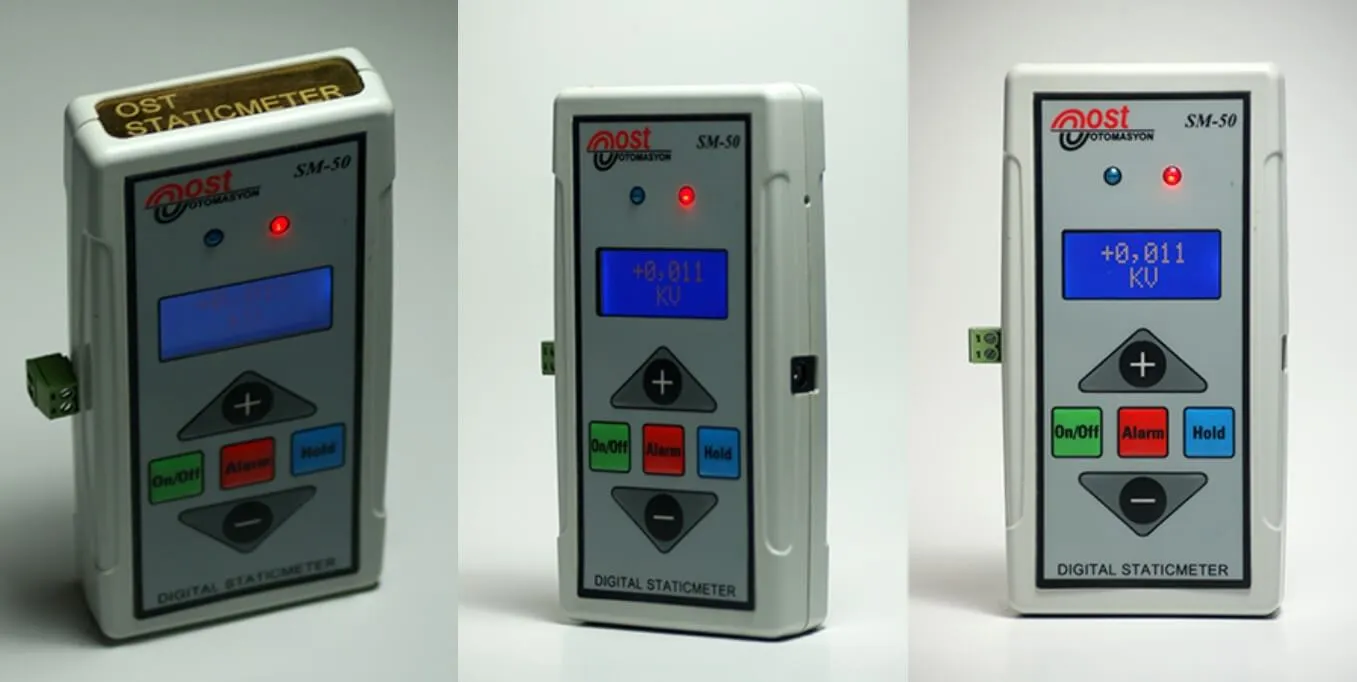
Measurement: The static meter measures the level and polarity of the charge on insulating materials such as fabric from a distance of 1–10 cm. Measurements taken in front of and behind the bar show whether neutralization is taking place.
| Problem | Solution | Product |
|---|---|---|
| Fibers fluff up, the web is not laid down evenly | Close-range neutralization (up to 4 cm) | Antistatic bar |
| Fibers and yarn wrap around the machine | Neutralization at the roller exit | Antistatic bar |
| Bar cannot be brought close to the material | Ions carried by compressed air (up to 50 cm) | Air-assisted antistatic bar |
| Large area in warping and winding | Fan-driven ionized air (1–2 m) | Ionizing blower |
| Location and polarity of the charge unknown | Measurement | Static meter |
For the right solution
To determine the right product and bar length, please share the following information: the material processed (fiber, yarn, woven fabric or nonwoven), the material width, the line speed, the mounting distance between the equipment and the material, and whether compressed air is available on the line. The process point at which the problem gets worse, and the season in which it does so, are also useful information for diagnosis.
Send us the information via the contact form, and we will determine the best solution for your line together.