Where does static electricity arise in melamine-faced MDF and particleboard production?
Melamine-faced MDF and particleboard are faced boards produced by pressing impregnated decor paper onto the surface of MDF or particleboard. During production, the paper and the board go through many handling, stacking and placement steps:
- Preparing the decor paper: As the papers are cut and stacked, and taken one by one from the stack, the sheets separate from each other and become charged.
- Placing the paper on the board: After the paper has been laid on the board, the board is conveyed until it enters the press. During this time, the paper must stay in place.
- Conveying and stacking: Friction of the boards and papers against conveyors and against each other is another source of charge.
In this industry, static electricity plays two different roles: unwanted charge is a problem that needs to be eliminated, while charge is created deliberately to hold the paper on the board.
Effects on production
If adhesion is insufficient: The decor paper can slip or lose its position on the board before pressing. When the paper and the board are misaligned, faulty facing and scrap result, and the line may have to be slowed down.
If there is unwanted charge: Paper sheets stick together and cannot be taken from the stack properly. Charged surfaces attract dust; dust trapped between the paper and the board can show up as a visible surface defect after pressing. Operators who touch the charged material can also receive electric shocks.
How does static charging (pinning) work?
Static charging is a method of creating static electricity deliberately and in a controlled way, instead of eliminating it. Powered by a DC high-voltage power supply, the charging bar ionizes the air. Because the voltage is unidirectional, only ions of one polarity move toward the material and accumulate on its surface. The charged paper is attracted to the board underneath by electrostatic force and adheres to it with no air in between. No adhesive or mechanical fixing is required.
This adhesion is temporary, not permanent. How long it lasts depends on seasonal temperature changes, the ambient humidity and the conductive resistance of the material. In humid air, the charge dissipates faster; as a result, the same line may need different settings in summer and winter.
Solution: which product, where?
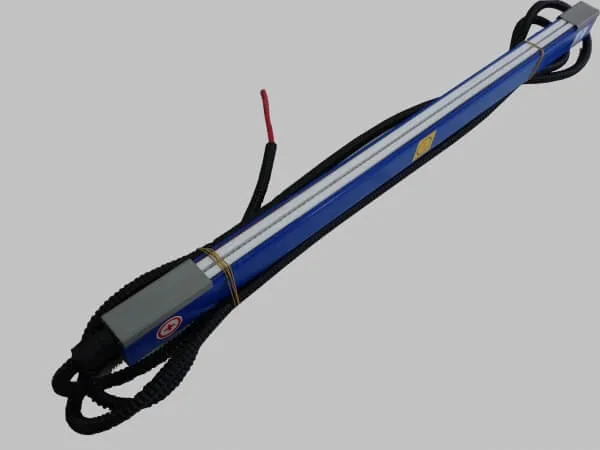
Holding the paper on the board: The production of melamine-faced particleboard and MDF is one of the main applications of the DC static charging bar. The bar can be manufactured from 10 cm up to 400 cm to suit the board width. Because the operating voltages are high, it is designed, unlike static eliminating bars, with a fully insulated body and components; this design provides protection against the risk of arcing and insulation breakdown. The standard cable length is 2.5 m and can be extended on request.
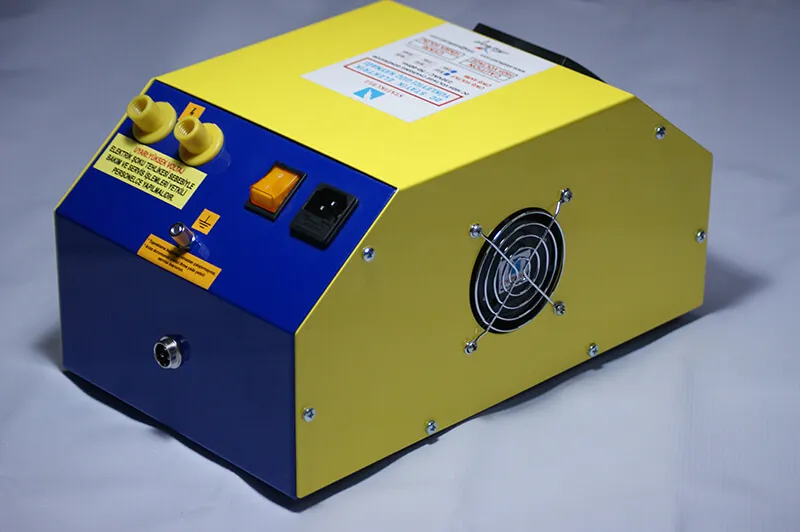
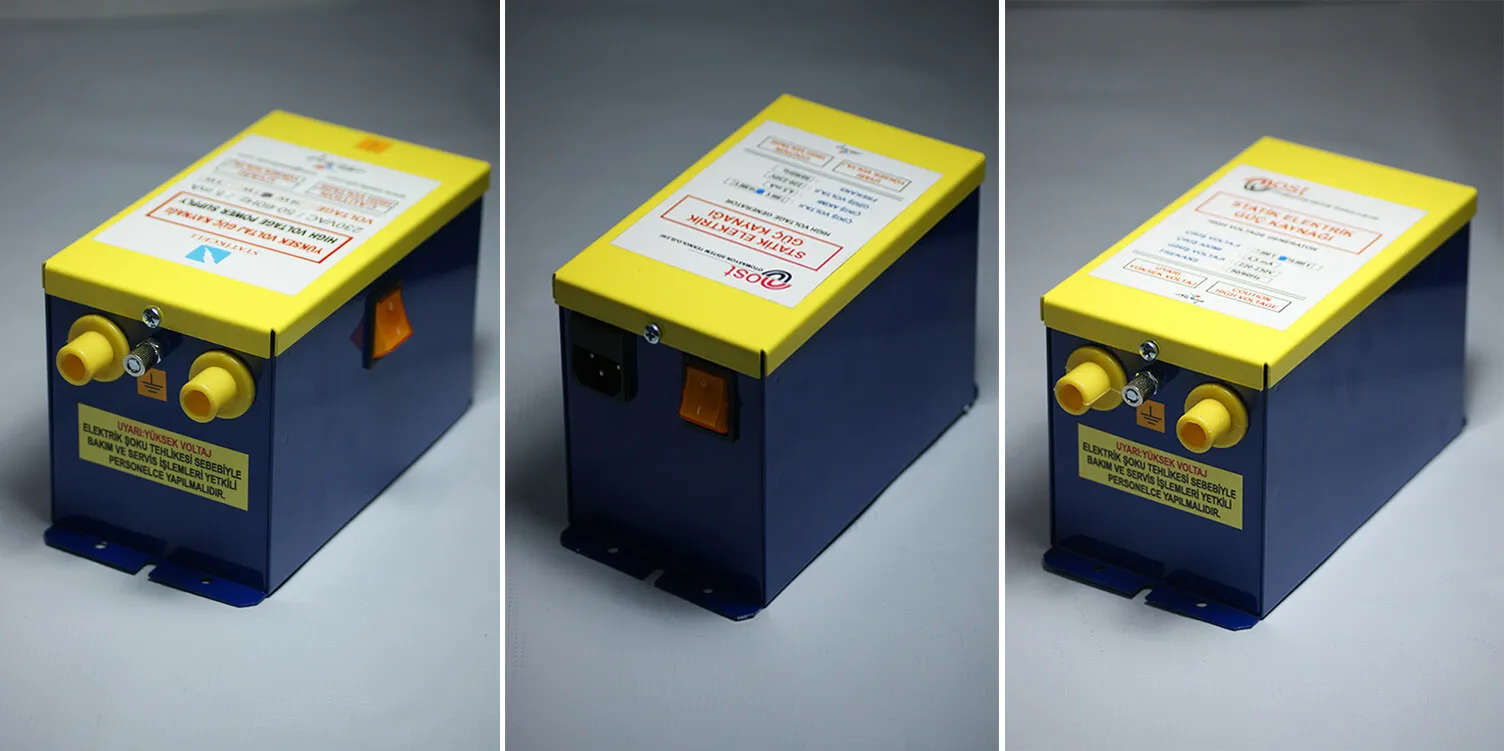
Providing the charging voltage: The DC static charging power supply generates a high voltage of DC 20–100 kV (depending on the model); the polarity is selected as negative or positive according to the application. Because the output voltage can be set on the digital display, the adhesion force can be adjusted to suit the material and the ambient conditions. Because the output can be switched on and off by the connected system or from an external point, charging can run in step with the machine cycle.
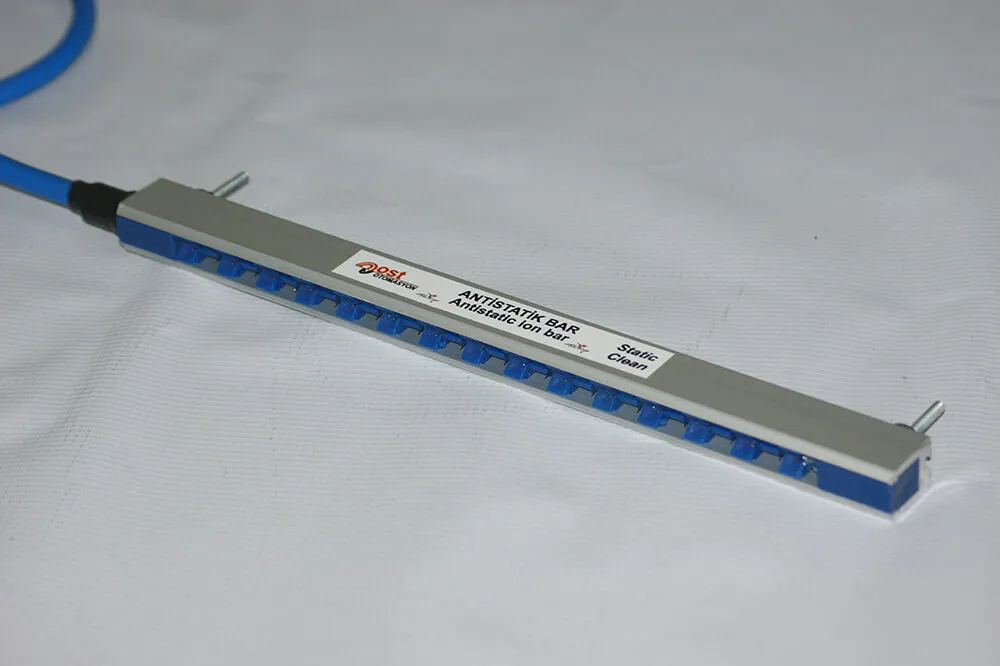
Eliminating unwanted charge: For problems such as paper sheets sticking together and dust clinging to surfaces, the antistatic bar is used. The bar works at a maximum distance of 4 cm from the material; with air-assisted models, this distance increases to up to 50 cm. The high voltage required is supplied by the AC antistatic power supply, which also counts melamine-faced MDF and particleboard production among its applications.
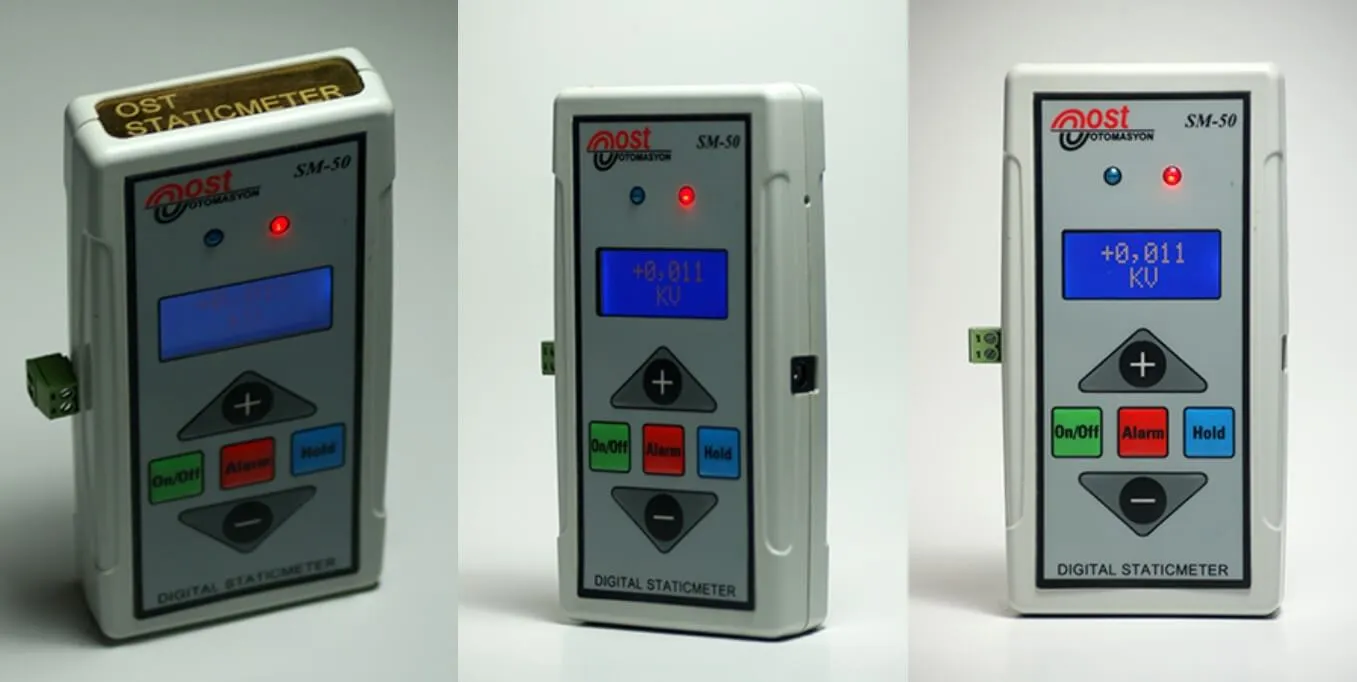
Measuring: The static meter shows the level and polarity (+/−) of the charge. Polarity information is useful in static charging applications for seeing which polarity the material has been charged with.
| Problem | Solution | Product |
|---|---|---|
| Decor paper slips on the board before pressing | Static charging (pinning) | DC charging bar and DC power supply |
| Adhesion differs between summer and winter | Adjusting the voltage to the conditions, measurement | DC power supply and static meter |
| Paper sheets stick together | Neutralization (up to 4 cm) | Antistatic bar and AC power supply |
| Charging polarity unknown | Polarity measurement | Static meter |
For the right solution
To determine the right system, please share the following information: the type of paper and board, the board width, the line speed, the mounting distance between the bar and the material, the surface to which the paper needs to adhere, the ambient temperature and humidity, any need for integration with the machine control system and, if an air-assisted bar is being considered for static elimination, whether compressed air is available on the line.
Send us the information via the contact form, and we will work out an application-specific solution for your melamine-faced MDF or particleboard line together.