Static electricity is usually seen as a problem to be eliminated. In some applications, however, static electricity is created deliberately and in a controlled way. This method is called static charging or, more commonly in English, pinning.
How does static charging work?
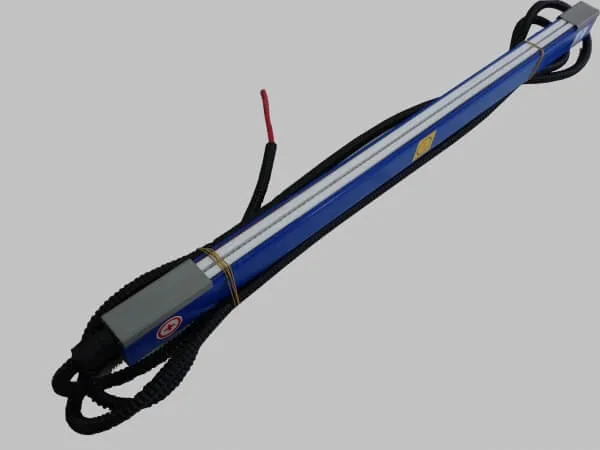
Antistatic bars neutralize charge by generating both positive and negative ions with AC voltage. Static charging bars, by contrast, are supplied by a DC high-voltage power supply and give the material a single-polarity charge.
The charged material is drawn by electrostatic force to a nearby surface that is grounded or oppositely charged. This allows two surfaces to adhere to each other temporarily, with no air in between and without any adhesive, clips or mechanical fastening.
Where is it used?
Statikcell DC charging bars and power supplies are used in applications such as:
- In-mold labeling (IML): The label is held on the surface of the injection mold by static charge and stays in place until the plastic is injected.
- Production of melamine-faced MDF and particleboard: The decor paper is made to adhere to the board surface.
- Reel changing, stacking and lamination: Where film and paper layers must stay together without slipping.
- Bag cutting and edge bonding: In processes where layers need to be held together temporarily.
Why an insulated body?
The voltages used in static charging applications are high; Statikcell DC charging bars operate in the 20–100 kV range. For this reason, charging bars, unlike static eliminating bars, are designed with a fully insulated body and components. This construction protects against the risk of arcing and insulation breakdown at high voltage.
Factors affecting adhesion
The adhesion provided by static charging is temporary, not permanent. How long it lasts depends on seasonal temperature changes, the ambient humidity and the conductive resistance of the material. In humid air, the material surface becomes more conductive and the charge dissipates faster, whereas materials with a high conductive resistance hold the charge longer. As a result, the same line may need different settings in summer and winter.
A static meter can be used to see which polarity the material has been charged with. The static meter shows the level and polarity (+/−) of the charge on the surface, so you can check whether the charging process is working as expected.
Choosing the right system
In a static charging system, the bar and the power supply are considered together:
- Bar length: Statikcell DC charging bars can be manufactured from 10 cm up to 400 cm; the length is chosen according to the width of the material to be charged.
- Cable length: The standard cable length is 2.5 m; it can be extended to suit the machine layout.
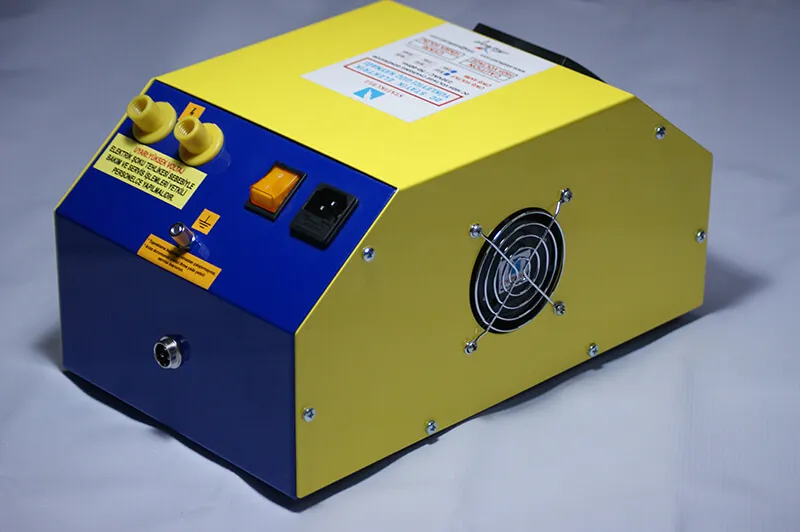
- Power supply: The voltage and current values the application requires determine the choice of power supply. The Statikcell DC static charging power supply lets you set the output voltage on the digital display and choose positive or negative polarity depending on the application; the output can be switched on and off by the connected system or from an external point.
If your application requires materials to adhere temporarily, share details of the material type, width and process, and we will determine the right charging system together.